- All
- Product Name
- Product Keyword
- Product Model
- Product Summary
- Product Description
- Multi Field Search
English


Views: 0 Author: Site Editor Publish Time: 2026-06-15 Origin: Site


Selecting the optimal high-nickel alloy bar for extreme environments is a tough engineering challenge. You must carefully balance demanding high-temperature performance against practical procurement limits. An incorrect specification often leads to premature component failure or wasted material budgets.
Inconel 600 and 601 serve as the industry-standard baseline materials for aggressive thermal and corrosive applications. These alloys provide exceptional strength and structural stability across a massive range of operating conditions.
This guide acts as a technical, evidence-based evaluation matrix to clarify your selection process. It is designed to help engineers and procurement teams decide between Inconel 600 and Inconel 601 bar stock without over-specifying. By following these parameters, you will ensure long-term reliability for your next critical project.
Core Difference: Inconel 601 features an aluminum addition (1-1.7%) that drastically improves resistance to high-temperature oxidation and spalling compared to 600.
Temperature Thresholds: Alloy 601 excels in cyclic thermal shock environments up to 2200°F (1200°C), while 600 is typically capped at around 2000°F (1093°C) for continuous oxidation resistance.
Machining Reality: Both alloys present work-hardening challenges, but rigid tooling and aggressive feeds are critical for processing any Inconel bar/rod.
Cost-to-Performance: 601 generally carries a slight premium; unjustified for standard chemical processing but essential for advanced thermal processing hardware.
Both materials build their structural integrity upon a solid foundation of nickel and chromium. This chemistry makes them exceptional solid-solution strengthened alloys. They do not rely on precipitation hardening. Instead, they derive their strength directly from their dense atomic matrix. This baseline chemistry gives every Inconel Alloy its legendary resistance to extreme environments.
The high nickel content provides intrinsic resistance to chloride-ion stress-corrosion cracking. The chromium delivers crucial defense against oxidizing conditions. However, the precise elemental balance dictates where each alloy performs best.
The core metallurgical difference lies in a highly specific elemental modification. Engineers modified the baseline 600 chemistry to create 601. They added a tightly controlled amount of aluminum (typically 1.0% to 1.7%). They also optimized the silicon content.
This aluminum addition changes how the metal behaves under intense heat. When exposed to extreme temperatures, 601 forms a unique, tightly adherent oxide scale. This alumina-rich layer effectively seals the underlying metal. It prevents aggressive spalling during rapid cyclic heating. Without this aluminum modification, conventional alloys often flake and degrade quickly under thermal shock.
Adhering to recognized standards is non-negotiable for critical infrastructure. You must ensure your material meets authoritative baselines. Common specifications govern both materials in round, square, or hex forms.
| Specification Standard | Inconel 600 | Inconel 601 |
|---|---|---|
| ASTM Standard (Bar/Rod) | ASTM B166 | ASTM B166 |
| ASME Boiler & Pressure Vessel | ASME SB-166 | ASME SB-166 |
| SAE Aerospace (AMS) | AMS 5665 | AMS 5715 |
| UNS Designation | N06600 | N06601 |
Verifying these specifications ensures predictable mechanical behavior. Always demand material test reports mapping back to these exact ASTM or AMS requirements.
Evaluating these metals requires looking beyond basic chemistry. You must assess how they behave under operational stress. High-temperature environments expose materials to simultaneous physical and chemical attacks.
Degradation rates differ wildly between continuous and cyclic thermal environments. Inconel 600 performs admirably in continuous oxidation up to 2000°F (1093°C). As long as the temperature remains stable, its protective chromium oxide layer remains intact.
However, cyclic environments destroy continuous oxide layers. Rapid heating and cooling force the metal to expand and contract constantly. This thermal cycling causes the protective scale on 600 to crack and spall off. Fresh metal is then exposed to further oxidation.
Decision Lens: If your application involves rapid heating and cooling cycles, you must upgrade. The alumina-forming capability of 601 makes it the mandatory choice for cyclic thermal shock.
Heat resistance is only half the engineering equation. Aqueous corrosion resistance plays an equally important role in many chemical processes.
Inconel 600 demonstrates distinct superiority in high-purity water systems. Engineers frequently specify it for primary water piping in nuclear reactors. It also excels in caustic environments. It offers near-total immunity to chloride-ion stress-corrosion cracking.
Conversely, 601 faces limits in aqueous environments. The very aluminum that gives it high-temperature dominance can become a liability in certain wet chemical applications. It is optimized for gaseous high-temperature environments, not submerged corrosive tanks.
Round bars must retain their tensile and yield strength when heated. Both alloys maintain excellent mechanical properties at sub-zero and elevated temperatures. However, prolonged exposure to extreme heat induces creep. Creep is the slow, permanent deformation of a solid material under mechanical stress.
Alloy 601 generally exhibits superior creep-rupture strength at highly elevated temperatures. It resists dimensional deformation better than 600 when operating near the 2000°F threshold. This makes a Inconel 601 bar ideal for load-bearing structural supports inside industrial furnaces.
| Performance Metric | Alloy 600 Bar | Alloy 601 Bar |
|---|---|---|
| Continuous Heat Max | ~ 2000°F (1093°C) | ~ 2200°F (1200°C) |
| Cyclic Heat Resistance | Moderate (Prone to spalling) | Exceptional (Alumina scale) |
| Aqueous Corrosion | Excellent (Caustics/Water) | Good (Not optimized for wet) |
| Creep Rupture Strength | High | Very High |
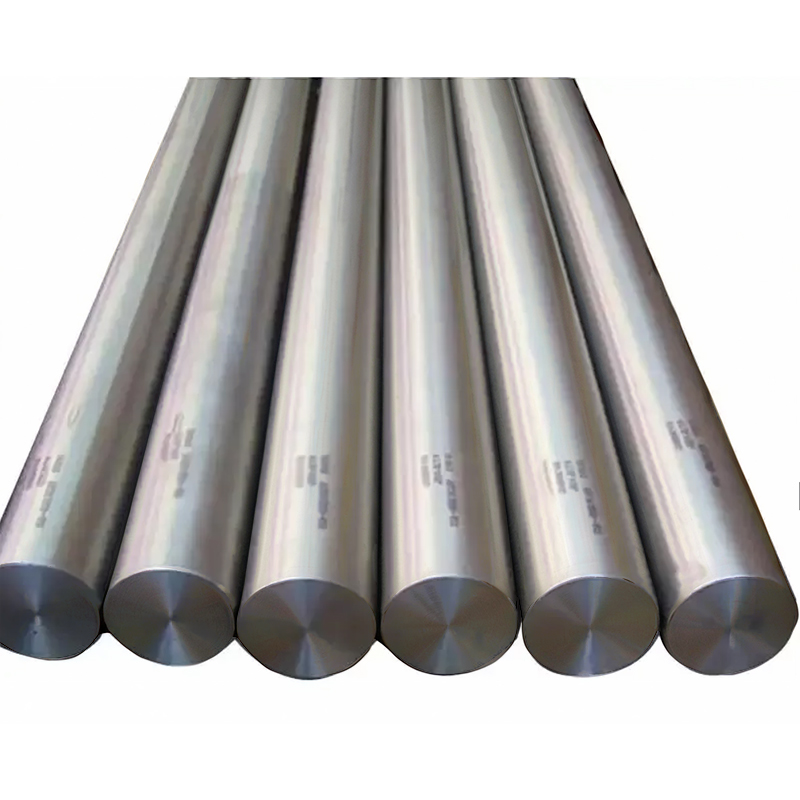
Selecting the right alloy is only the first step. You must also successfully manufacture your components. High-nickel alloys are notoriously challenging to process. They demand specialized knowledge on the shop floor.
Both alloys share a challenging physical trait. They work-harden rapidly during machining. As the cutting tool strikes the metal, the surface becomes significantly harder. If the tool rubs instead of cutting cleanly, it will glaze the surface.
Common Mistake: Using light, timid feed rates. This leads directly to rapid tool wear and ruined parts.
Best Practice: Rigid tooling is an absolute necessity. You must use aggressive feeds and slow cutting speeds. Heavy, continuous cuts get beneath the work-hardened layer. Positive rake angle tools help shear the metal efficiently. Using copious amounts of high-quality sulfurized cutting fluid improves tool life drastically when turning or milling an Inconel Bar/Rod.
Fabricating complex assemblies often requires welding round bars to plates or tubes. Both alloys present specific micro-fissuring risks if heat input is poorly managed.
Matching filler metals are strictly required. You must carefully control the interpass temperatures. Heat buildup causes localized stress, leading to microscopic cracks along the weld seam.
Alloy 601 introduces an additional complication. Its aluminum content readily forms refractory oxides during welding. You must maintain incredibly precise shielding gas control during TIG (GTAW) or MIG (GMAW) operations. Absolute cleanliness and pure argon shielding prevent these stubborn oxides from causing weld inclusions.
Hot working and cold drawing processes dictate how round bars are initially shaped. Both materials handle hot working well, provided they are heated uniformly. However, they have distinct temperature windows for forging.
Cold drawing increases the mechanical strength of the rod. Because both alloys work-harden quickly, cold forming requires substantial intermediate annealing. Trying to draw these metals too far without proper thermal relaxation will cause internal fracturing.
Theoretical properties matter little without practical context. Choosing the correct specification requires aligning material traits with operational realities. Use this framework to guide your final decision.
You should default to Alloy 600 for applications facing aggressive chemical attacks rather than pure thermal shock. It thrives in environments where high nickel content acts as a chemical barrier.
Chemical and food processing equipment: The alloy resists diverse organic and inorganic compounds. It leaves product streams uncontaminated.
Reactor vessels and heat exchanger tubing supports: It maintains structural integrity in high-purity water applications.
Ammonia bearing atmospheres: High nickel provides massive resistance to nitriding environments. It prevents embrittlement during ammonia processing.
You must elevate your specification to 601 when fluctuating, extreme temperatures dominate the operating environment. The alumina scale is mandatory here.
Thermal processing equipment: Radiant tubes, muffles, and retorts experience continuous thermal cycling. Alloy 601 prevents premature structural degradation.
Aerospace engine components: Turbine tie-rods and exhaust systems rely on its high creep resistance.
High-temperature fastening systems: Refractory anchors require exceptional dimensional stability while subjected to furnace heat.
Sometimes, neither alloy provides sufficient protection. You must recognize when operational limits exceed the capabilities of solid-solution alloys.
If your application requires operational strength above 2200°F (1200°C), look toward Inconel 602CA. It contains higher carbon and distinct alloying elements for supreme extreme-heat performance. If you strictly require precipitation-hardening for massive tensile strength at high temperatures, consider Inconel 718. Risk mitigation means knowing when to jump to a higher-tier material.
Engineering perfection must eventually intersect with supply chain reality. Availability directly influences project timelines. Understanding market dynamics helps you avoid costly procurement delays.
The global supply chain treats these two alloys slightly differently. Inconel 600 enjoys universal recognition as a baseline material. Consequently, it is broadly stocked by service centers worldwide. You can easily find it in a massive range of standard diameters, from thin wire to massive forged billets.
Inconel 601 requires more strategic sourcing. While standard rough-turned rounds are accessible, highly specific forms demand longer lead times. If your project requires tight-tolerance centerless ground rods, you must account for mill production schedules. Standard stock profiles for 601 are generally narrower than those for 600.
Procurement teams constantly wrestle with specification balancing. The key is avoiding the twin traps of under-specifying and over-specifying.
Under-specifying presents massive operational risk. Using 600 in a cyclic thermal furnace will cause premature material failure. The metal will spall, weaken, and collapse. The resulting factory downtime easily destroys any initial material savings.
Over-specifying strains project budgets needlessly. Paying the premium for 601's cyclic oxidation resistance makes no sense for a low-temperature caustic storage tank. Alloy 600 already handles that environment perfectly. You must match the metallurgical capability to the exact threat profile of the application.
Selecting between these two powerhouse materials comes down to a clear evaluation of your environmental threats. They share a robust nickel-chromium foundation, but their specific alloying elements dictate their industrial destinies.
Choose Inconel 600 when you need exceptional general corrosion resistance at moderate-to-high temperatures. It remains the reigning champion for caustic environments and high-purity water systems. Choose Inconel 601 strictly for extreme, cyclic thermal oxidation. Its unique aluminum addition creates an impenetrable oxide shield against spalling.
Moving forward, ensure you consult material test reports (MTRs) to verify exact chemical compositions. Request a metallurgical consultation if your application borders on the specified temperature limits. Finally, submit an accurate request for quote (RFQ) detailing your required bar dimensions, tolerances, and surface finishes.
A: No. Substituting 600 in cyclic thermal furnace applications presents an immediate risk of catastrophic failure. Alloy 600 lacks the aluminum necessary to form a tightly adherent oxide scale. Constant heating and cooling will cause the surface to spall and flake away rapidly. This leads to swift structural degradation.
A: Both alloys are notoriously difficult to process due to rapid work-hardening. From a machinist's perspective, 601 can feel slightly more abrasive due to its aluminum and silicon content. Both require identical heavy tool pressure, rigid setups, and aggressive feed rates to get beneath the hardened surface layer.
A: Standard diameters typically range from 0.25 inches (6.35 mm) up to massive 12-inch (304 mm) forged rounds. Smaller diameters are usually cold drawn and polished. Mid-to-large diameters are commonly supplied in a hot-finished, rough-turned, or peeled condition to remove surface oxidation.
A: Alloy 601 generally carries a slight market premium over 600. This is due to its specialized chemistry and slightly tighter supply chain availability. While raw material fluctuations constantly shift precise margins, you should expect 601 to command a moderately higher investment per pound.


