- All
- Product Name
- Product Keyword
- Product Model
- Product Summary
- Product Description
- Multi Field Search
English


Views: 0 Author: Site Editor Publish Time: 2026-07-06 Origin: Site


Specifying materials for environments that demand simultaneous resistance to extreme mechanical stress, corrosive elements, and severe temperature fluctuations presents a strict engineering challenge. Material failure in mission-critical applications across aerospace, space exploration, oil and gas extraction, and cryogenic storage carries severe safety risks and immense financial implications. Selecting the wrong superalloy or accepting substandard mill runs leads directly to catastrophic system failures.
Engineers must distinguish between the trademarked INCONEL® alloy 718, originally developed by Special Metals Corporation, and generic industry designations like Alloy 718, UNS N07718, and W.Nr. 2.4668. Regardless of the specific nomenclature, this material represents the industry-standard precipitation-hardening nickel-chromium alloy.
This guide evaluates the mechanical properties, nominal chemical composition, compliance specifications, and fabrication realities of inconel 718 bar to support rigorous procurement decisions and ensure long-term operational success in severe environments.
Extreme Temperature Stability: Maintains high tensile strength, yield strength, and ductility from cryogenic temperatures (-423°F / -253°C) up to 1300°F (704°C), with oxidation resistance up to 1800°F (982°C).
Exceptional Mechanical Fatigue Resistance: Delivers superior creep-rupture strength, making it the default choice for high-stress rotating parts, liquid rocket engines, and high-pressure vessels.
Fabrication Viability: Unlike many other superalloys, permits welding and forming in the annealed condition without spontaneous strain-age hardening during subsequent heating and cooling cycles.
Strict Specification Requirements: Procurement requires rigorous verification of product forms (Round Bar/RD Bar, Hex Bar, Flat Bar) against UNS N07718, W.Nr. 2.4668, and relevant AMS/ASTM standards to ensure metallurgical integrity.
Components operating in extreme environments, such as gas turbine engine parts, cryogenic LNG valves, and downhole oil tools, require materials that will not become brittle at cryogenic lows or undergo catastrophic creep-deformation at high heat. Success demands a stable metallurgical structure capable of withstanding immense pressure and thermal shock. Engineers specify this material when baseline carbon steels or standard austenitic stainless steels fail to meet the mechanical load requirements at elevated temperatures.
The performance of inconel alloy relies on its precise nominal chemical composition. Each element contributes specific properties to the final matrix, creating a highly engineered microstructure.
| Element | Percentage (Weight %) | Primary Function in the Alloy Matrix |
|---|---|---|
| Nickel (Ni) | 50.0 - 55.0% | Provides high-temperature strength and resistance to chloride-ion stress-corrosion cracking. |
| Chromium (Cr) | 17.0 - 21.0% | Imparts essential oxidation and high-temperature corrosion resistance. |
| Niobium/Columbium (Nb/Cb) | 4.75 - 5.50% | The primary alloying element enabling precipitation hardening through the formation of the gamma double prime phase. |
| Molybdenum (Mo) | 2.80 - 3.30% | Enhances pitting resistance and solid-solution strengthening. |
| Titanium (Ti) | 0.65 - 1.15% | Auxiliary element for precipitation hardening (gamma prime phase). |
| Aluminum (Al) | 0.20 - 0.80% | Works with Titanium to support the precipitation hardening process. |
| Iron (Fe) | Balance | Optimizes cost-effectiveness while maintaining alloy stability. |
The sluggish kinetics of the niobium-alloyed gamma double prime precipitate phase give this alloy a distinct advantage over titanium-aluminum hardened alternatives. This characteristic allows the material to be welded and annealed without immediate, uncontrollable hardening. Engineers can fabricate complex components in a softer state before applying a final aging treatment to achieve maximum strength. The delayed aging response prevents strain-age cracking during post-weld heat treatments, a common failure mode in other high-strength superalloys.
During the aging process, the material is typically held at 1325°F (718°C) for 8 hours, furnace cooled to 1150°F (621°C), held for a total aging time of 18 hours, and then air cooled. This precise thermal cycle precipitates the intermetallic compounds throughout the nickel-chromium matrix, locking the grain boundaries and drastically increasing the yield strength.
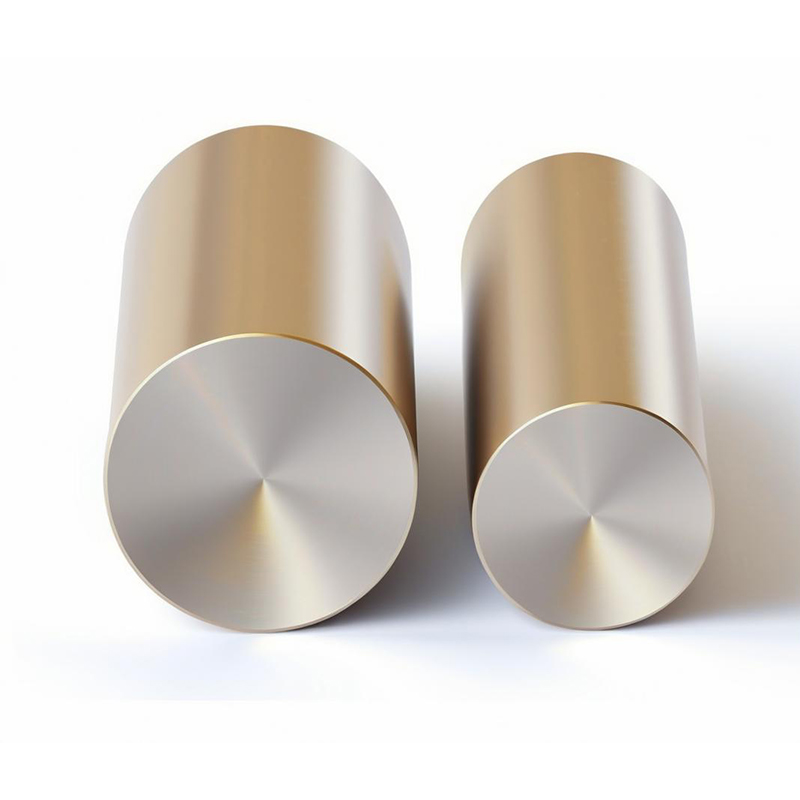
Mapping specific material properties to real-world engineering outcomes helps clarify why this alloy is frequently specified for demanding applications. The mechanical properties shift significantly depending on whether the material is in the solution-annealed or precipitation-hardened condition.
In the annealed state, the material remains relatively ductile and formable, allowing for heavy machining and forming operations. Once age-hardened, it exhibits massive increases in tensile and yield strength. These metrics translate directly to high load-bearing capabilities, allowing engineers to design thin-walled or lightweight structural components that do not compromise on safety or performance under extreme mechanical loads.
| Condition | Temperature | 0.2% Yield Strength (ksi) | Tensile Strength (ksi) | Elongation (%) |
|---|---|---|---|---|
| Solution Annealed | Room Temp (70°F) | ~70 | ~140 | ~45 |
| Precipitation Hardened | Room Temp (70°F) | ~170 | ~210 | ~20 |
| Precipitation Hardened | 1200°F (649°C) | ~145 | ~175 | ~18 |
| Precipitation Hardened | -320°F (-196°C) | ~195 | ~260 | ~22 |
Structural stability under prolonged, high-temperature mechanical stress dictates the lifespan of rotating machinery and pressure vessels. The alloy prevents plastic deformation over thousands of operational hours. It ensures reliable performance in gas turbines and rocket engines where creep-rupture leads directly to catastrophic failure. The material maintains its grain structure under continuous centrifugal forces and thermal cycling, resisting the microscopic void formation that precedes creep failure.
Maintaining exceptional impact strength and ductility at -423°F (-253°C) prevents the low-temperature embrittlement common in carbon steels and ferritic stainless steels. This property proves mandatory for LNG processing equipment and liquid hydrogen or oxygen rocket fuel systems. Unlike materials that transition from ductile to brittle at sub-zero temperatures, this nickel-based matrix retains its toughness, absorbing impact energy without fracturing.
The nickel-chromium matrix forms a protective passivation layer that resists aggressive environments. It performs exceptionally well against hydrogen sulfide, sour gas, carbon dioxide, and high-temperature combustion environments up to 1800°F. This makes it highly suitable for downhole drilling tools, wellhead components, and aerospace exhaust systems. The high molybdenum content specifically targets pitting and crevice corrosion in chloride-rich environments, such as offshore platforms and marine applications.
Navigating the regulatory and quality assurance frameworks ensures compliance when specifying materials for highly regulated industries. Standardizing designations across international procurement channels guarantees consistency and traceability from the mill to the final installation.
Engineers must call out critical specifications on purchase orders to guarantee material performance. Failing to specify the correct condition results in receiving material that cannot be machined or lacks the required strength.
AMS 5662 (Capable of Alloy 718 / Solution Annealed): Consists of material solution treated at 1775°F (968°C); optimized for subsequent forming, machining, or welding prior to aging.
AMS 5663 (Precipitation Hardened / Aged): Consists of material solution treated and fully precipitation hardened; optimized for immediate high-strength structural use.
ASTM B637: Standard specification for precipitation-hardening nickel alloy bars, hot-worked or cold-worked, intended for high-temperature service.
ASME Boiler and Pressure Vessel Code (Section VIII): Compliance standards for high-pressure cryogenic and elevated-temperature vessels.
NACE MR0175 / ISO 15156: Strict hardness limits and heat-treatment controls required for downhole tools exposed to sour oil and gas environments.
Comparing high-performance materials ensures you select the correct solution for specific operational requirements. Over-specifying leads to unnecessary costs, while under-specifying risks component failure.
While 718 relies on precipitation hardening for high strength, 625 utilizes solid-solution strengthening from the addition of molybdenum and niobium. Choose 718 when the application demands high mechanical yield strength and fatigue resistance under heavy loads. Opt for 625 when superior extreme corrosion resistance and weld overlays without age-hardening requirements are the primary concerns. 625 is often preferred for marine exhaust systems and chemical processing equipment where sheer tensile strength is secondary to corrosion immunity.
Titanium alloys, such as Ti-6Al-4V, offer excellent weight-to-strength ratios but typically lose strength rapidly above 800°F (427°C). In contrast, 718 maintains continuous structural capability up to 1300°F. The choice depends on balancing titanium's weight-saving advantages against the superior high-temperature strength of the nickel alloy. Aerospace engineers frequently use titanium for cold-section compressor blades and switch to 718 for the hot-section turbine disks and exhaust components.
Processing this exceptionally tough material presents practical challenges for manufacturing facilities. The alloy tends to work-harden rapidly and has low thermal conductivity, which concentrates heat at the cutting tool edge rather than dissipating it into the chip.
Implementing exact mitigation strategies prevents excessive tool wear and scrapped parts.
Utilize rigid, heavy-duty machine setups to prevent vibration and chatter.
Use positive rake angles on carbide tooling to shear the metal rather than rub it.
Implement slow cutting speeds combined with heavy, continuous feeds to get beneath the work-hardened surface layer.
Apply copious amounts of high-quality, sulfur-free cutting fluid to manage heat generation.
Distinguish between machining in the annealed condition (AMS 5662) for bulk material removal versus final finish machining in the aged condition (AMS 5663) to hold tight dimensional tolerances.
The alloy offers excellent resistance to post-weld strain-age cracking. It is necessary to perform welding in the annealed condition, followed by appropriate post-weld heat treatment to achieve optimal joint strength and recrystallization. Gas Tungsten Arc Welding (GTAW) and Electron Beam Welding (EBW) are the preferred methods. Welders must ensure absolute cleanliness of the joint area, removing all oxides, oils, and shop dirt to prevent porosity and embrittlement in the weld zone.
Evaluating suppliers and mitigating supply chain risks are mandatory steps when purchasing inconel bar/rod. The high cost of the raw material means procurement errors heavily impact project budgets.
Availability varies based on industrial requirements and mill production runs.
Round Bar (RD Bar): Typically offered from 0.5-inch up to 6-inch diameters, with specialized 3–6 inch diameter bar being highly standard for forged parts and heavy machining.
Hex Bar & Flat Bar: Used for high-strength fasteners, specialized fittings, and structural brackets in aerospace assemblies.
Square Bar & Custom Forging Billets: Procured for heavy-duty industrial components, valve bodies, and blowout preventers.
It is absolutely necessary to request comprehensive Mill Test Reports (MTRs) to verify chemical composition, melting method, heat-treatment lot, hardness values, and ultrasonic non-destructive testing results. Premium applications often require material that is Vacuum Induction Melted followed by Vacuum Arc Remelted (VIM-VAR) to ensure the highest level of metallurgical purity and minimize non-metallic inclusions.
This material remains the undisputed choice for applications requiring a precise balance of high-temperature creep resistance, cryogenic ductility, and fabricability. If the application operating temperature exceeds 1000°F, requires exceptional yield strength, and involves complex welding or machining, this alloy is the optimal specification.
Consult with a metallurgist to finalize exact AMS/ASTM specifications for your operational environment.
Review dimensional tolerances and machining allowances for your specific profile requirements.
Request a technical quote from a certified supplier with full MTR traceability.
Establish a clear post-weld heat treatment protocol with your fabrication team.
A: It maintains high strength and structural integrity up to 1300°F (704°C) and offers oxidation resistance up to 1800°F (982°C).
A: Yes, it retains excellent ductility and impact strength at temperatures as low as -423°F (-253°C), making it ideal for LNG and liquid rocket fuel systems.
A: AMS 5662 is solution annealed and optimized for machining and forming, while AMS 5663 is fully precipitation hardened for immediate high-strength use.
A: Niobium enables precipitation hardening by forming the gamma double prime phase, which provides the alloy's exceptional strength and sluggish aging response.
A: Use rigid setups, positive rake tooling, slow cutting speeds, and heavy, continuous feeds to cut beneath the work-hardened layer.
A: Aerospace applications typically require Vacuum Induction Melting followed by Vacuum Arc Remelting (VIM-VAR) to ensure high purity and eliminate non-metallic inclusions.


