- All
- Product Name
- Product Keyword
- Product Model
- Product Summary
- Product Description
- Multi Field Search
English


Views: 0 Author: Site Editor Publish Time: 2026-06-08 Origin: Site


Specifying materials for extreme temperatures and highly corrosive environments leaves no room for error. When standard stainless steels fail catastrophically under stress, engineers must demand high-performance superalloys. Standard metals warp, pit, or crack when exposed to severe industrial operations. This engineering reality forces us to look beyond conventional alloys and prioritize advanced metallurgical solutions.
Enter the Inconel 625 rod, a vital structural and fabrication component. Its true value lies in a unique combination of high yield strength and outstanding fatigue resistance. Furthermore, it rarely requires post-weld heat treatment, simplifying complex fabrication processes. You can rely on this material to perform consistently in conditions where other metals rapidly degrade.
This comprehensive guide breaks down the specific industrial applications for this remarkable material. We will explore key engineering evaluation criteria and highlight potential procurement risks. You will learn exactly how to source this specific Inconel Alloy safely, ensuring your next critical project meets all performance standards without costly supply chain disruptions.
Inconel 625 rod is primarily utilized in marine, aerospace, and chemical processing industries for components requiring high tensile strength and resistance to pitting/crevice corrosion.
It serves a dual purpose: as a machined structural component (like valve stems and fastener shafts) and as a highly effective welding filler metal.
Engineers often specify this **Inconel Bar/Rod** to join dissimilar metals and, in many cases, to eliminate the need for Post-Weld Heat Treatment (PWHT).
Procurement evaluation must strictly verify material compliance against standards like ASTM B446 or AMS 5666 to avoid substandard alloy substitution.
Engineers constantly face hostile operating conditions that destroy conventional metals. Two primary failure modes dictate the need for an upgrade: chloride-ion stress-corrosion cracking and extreme thermal degradation. Standard 300-series stainless steels experience rapid localized corrosion when exposed to seawater or chloride-rich chemicals. They also lose critical tensile strength as temperatures climb. When applications demand continuous operation in oxidizing environments up to 1800°F (982°C), traditional carbon and stainless steels become obsolete. They warp, scale, and eventually fail under mechanical load.
The mechanics behind this superalloy provide the ultimate solution. A highly refined nickel-chromium matrix forms the base of the material. However, the true strength comes from the addition of molybdenum and niobium. These elements distort the atomic lattice of the metal. This distortion creates a massive stiffening effect known as solid-solution hardening. Because of this unique chemistry, the metal achieves remarkable high strength without requiring a separate, complex strengthening heat treatment. You get exceptional toughness straight from the mill.
We must acknowledge the premium upfront cost of these superalloys. Nickel, molybdenum, and niobium remain expensive raw materials. Yet, engineers frame this cost against undeniable lifecycle savings. Upgrading to a superalloy drastically reduces unexpected facility downtime. Components survive much longer in harsh environments, which stretches maintenance intervals and eliminates the labor costs of frequent part replacements. The initial investment pays for itself through continuous, uninterrupted operational reliability.
| Performance Metric | Standard 316 Stainless Steel | Inconel Alloy 625 |
|---|---|---|
| Max Operating Temp (Approx) | 1500°F (815°C) | 1800°F (982°C) |
| Chloride Stress Cracking | Highly Susceptible | Virtually Immune |
| Strengthening Mechanism | Work Hardening Only | Solid-Solution Stiffening |
| Post-Weld Heat Treatment | Often Required | Rarely Required |
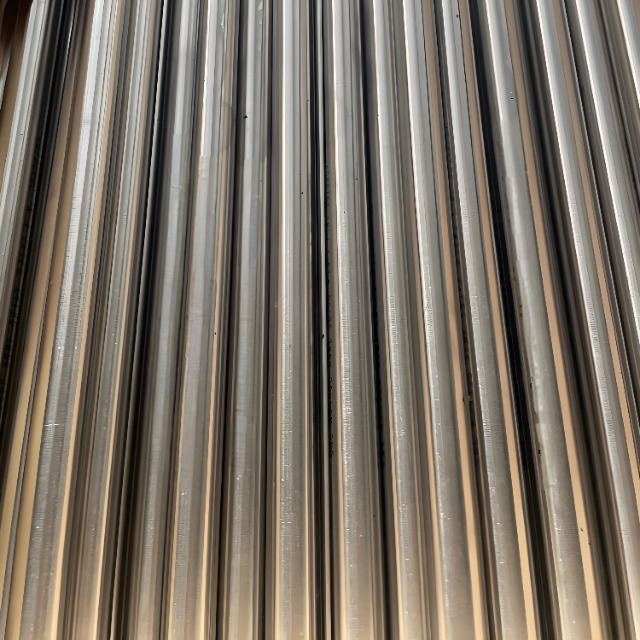
Various high-stakes industries rely on this exact material to keep critical systems functioning. We see consistent demand across three major sectors where failure results in catastrophic safety risks or massive financial losses.
The ocean represents one of the most corrosive environments on earth. Saltwater rapidly degrades standard marine hardware. Therefore, engineers utilize superalloy stock to machine propeller shafts, submarine propulsion motors, and vital underwater wire rope components. Subsea transducer housings also require this material to protect highly sensitive sonar and communication electronics.
The primary justification for this choice is complete resistance to pitting and crevice corrosion. Seawater stagnates in tight mechanical spaces, creating localized acidic zones. While marine-grade stainless steels eventually pit in these conditions, this nickel-based alloy remains pristine. It ensures decades of reliable subsea service without structural degradation.
Flight hardware operates under brutal mechanical and thermal stress. Aerospace engineers frequently machine this stock into engine exhaust system linkages, high-pressure turbine seals, and thrust reverser shafts. Structural mounting hardware for military aircraft also heavily depends on these rugged alloys.
The justification centers on high fatigue strength and thermal stability. Jet engines experience rapid, violent temperature cycling during takeoff, cruising, and landing. The material maintains its structural integrity despite these extreme fluctuations. It refuses to become brittle or warp, ensuring flight safety across thousands of operating hours.
Refineries and chemical plants pump highly aggressive fluids at extreme pressures. Technicians rely on machined superalloys for critical valve stems, high-pressure pump shafts, and sour gas handling components. Downhole drilling tools also utilize these materials to survive hostile subterranean environments.
The justification is chemical immunity. These environments feature highly corrosive inorganic acids, including concentrated sulfuric and hydrochloric acids. Furthermore, deep oil wells frequently contain hydrogen sulfide (H2S), known as sour gas. H2S causes sulfide stress cracking in standard metals. This superalloy easily resists these intense chemical attacks, preventing hazardous blowouts and leaks.
Beyond machined structural parts, this material dominates the welding industry as a premier filler metal. Fabricators face severe challenges when joining dissimilar alloys or repairing high-stress components. Welding two different metals usually causes uneven thermal expansion. This mismatch creates a brittle heat-affected zone (HAZ) prone to immediate cracking. To fix this, fabricators traditionally rely on expensive and time-consuming Post-Weld Heat Treatment (PWHT) to relieve residual stresses.
Using this specific welding filler rod provides a brilliant workaround. The chemistry of the filler metal naturally absorbs the varying metallurgical traits of the base metals. It acts as a ductile, highly resilient buffer zone between two incompatible materials.
Let us look at the implementation realities. The high niobium content prevents carbon migration during the welding process. It stabilizes the weld pool and strongly resists weld-metal cracking as the joint cools. Engineers frequently specify this filler to overlay cheaper base metals. They coat a heavy, inexpensive carbon steel pressure vessel with a thin layer of superalloy. This grants the vessel premium corrosion resistance at a fraction of the cost. More importantly, using this filler often allows fabricators to avoid PWHT entirely. Skipping the heat treatment phase significantly reduces project turnaround times and slashes overall fabrication costs.
Inadequate Shielding Gas: Failing to use pure argon or specialized argon-helium mixes leads to severe atmospheric contamination and weld porosity.
High Heat Input: Pushing too much amperage causes the weld puddle to become sluggish, increasing the risk of hot cracking.
Poor Joint Cleaning: Leaving sulfur-bearing oils, grease, or shop dirt on the joint guarantees catastrophic weld failure.
You cannot simply order a generic nickel alloy and hope for the best. Procurement requires strict adherence to international engineering standards. Evaluating an Inconel Bar/Rod requires a deep understanding of specifications, delivery conditions, and machinability factors.
Mandatory certifications guarantee material performance. Buyers must verify compliance with established metallurgical standards. ASTM B446 (and its ASME counterpart SB-446) serves as the core standard specification for rod and bar products. It dictates the exact chemical composition limits and baseline mechanical properties. If an aerospace application is involved, you must demand AMS 5666 compliance. This aerospace material specification requires far stricter testing, including rigorous ultrasonic inspection to detect internal microscopic voids.
The state of the metal upon delivery drastically alters its mechanical properties. You must specify the correct condition for your manufacturing process.
Annealed: The mill heats the metal to relieve internal stresses, rendering it as soft as possible. This condition is ideal if you plan to perform severe cold-forming or heavy bending.
Hot-Finished: The rod retains a rougher surface scale from the mill. It keeps some minor residual stresses and offers an economical choice for parts requiring extensive rough machining.
Cold-Drawn: The mill pulls the metal through a die at room temperature. This process dramatically increases yield strength and provides tighter dimensional tolerances. It is the premium choice for high-strength fastener applications.
We must provide transparent assumptions about tooling. This material is notoriously difficult to machine. It work-hardens rapidly. The moment a cutting tool rubs against the surface without cleanly slicing, the metal hardens into an impenetrable shield. Standard high-speed steel tools will burn up in seconds.
To successfully machine the rod into finished parts, operators must employ highly rigid tooling setups to prevent chatter. You need positive rake angles to shear the metal cleanly. Ensure heavy, continuous cuts; never let the tool dwell or glaze the surface. Finally, operators must flood the cutting zone with specialized high-pressure coolants to manage the intense heat generated during material removal.
The global metal supply chain contains numerous hidden traps. Sourcing high-performance superalloys demands rigorous supplier vetting. A single batch of substandard material can cause catastrophic structural failures.
You must insist on complete transparency. Buyers should demand detailed Mill Test Reports (MTRs) before accepting any shipment. An MTR verifies the exact chemical composition, physical testing results, and heat lot data from the original melting process. Counterfeit or "watered-down" nickel alloys remain a major risk. Unscrupulous vendors sometimes substitute cheaper scrap-melt alloys lacking the necessary molybdenum content. Without an MTR, you gamble with structural integrity.
Evaluate suppliers based on their tolerance capabilities. A rod destined for a high-speed pump shaft requires flawless roundness. Look for suppliers offering centerless grinding services. Centerless grinding guarantees tight diametrical tolerances and superior surface finishes. Conversely, rough-turned finishes work perfectly fine if your machine shop plans to turn the outer diameter down significantly. Match the surface finish to your specific manufacturing workflow.
Industrial projects operate on tight schedules. Discuss the strategic advantage of partnering with suppliers who hold active, floor-ready stock in multiple diameters. Relying on a supplier who merely acts as a broker means you might wait for mill-run production schedules. Mill runs often require massive Minimum Order Quantities (MOQs) and take several months to complete. Active inventory reduces your lead time from months to mere days.
Start the procurement process intelligently. Do not send a vague email asking for a price. Submit a comprehensive Request for Quote (RFQ). Explicitly list the required ASTM standard, exact diameter, total length, and required delivery condition (e.g., annealed vs. cold-drawn). Clarity eliminates quoting errors and signals to the supplier that you understand metallurgical requirements.
Navigating the complex landscape of high-performance superalloys requires precision and technical awareness.
The specified rod remains a critical, non-negotiable investment for applications where severe corrosion, extreme heat, and mechanical stress converge.
Successful implementation relies heavily on choosing the exact right material delivery condition (annealed, hot-finished, or cold-drawn) to match your machining capabilities.
Strict supplier traceability, backed by official Mill Test Reports, is the only way to prevent counterfeit materials from jeopardizing your project.
Skipping Post-Weld Heat Treatment by using this material as a filler metal yields massive fabrication time savings.
Take immediate action to secure your supply chain. Contact your in-house metallurgist to review current material failures, or submit your updated engineering drawings to a certified supplier for a verified material quote today.
A: Industry terminology is often used interchangeably. However, "rod" typically refers to round, smaller-diameter stock intended for further drawing, specialized machining, or use as a welding filler. Conversely, "bar" generally encompasses a wider variety of profiles, including square, hexagonal, or flat rectangular shapes used for heavy structural components.
A: No, it is a strictly non-magnetic alloy. The high nickel and chromium matrix prevents magnetic permeability. This characteristic makes it highly useful for specialized electrical applications, sensitive sensor arrays, and subsea instrument housings where magnetic interference would disrupt critical data collection.
A: It maintains excellent mechanical properties and strongly resists atmospheric oxidation up to approximately 1800°F (982°C). Beyond this temperature range, the material may begin to experience a reduction in tensile strength and gradual scaling, depending on the exact atmospheric conditions.
A: It is significantly harder to machine due to rapid work-hardening characteristics. It requires substantially lower cutting speeds, heavy continuous feeds, and highly rigid machine setups compared to 304 or 316 stainless steel. Standard tooling degrades rapidly without robust coolant application and positive rake angles.


