- All
- Product Name
- Product Keyword
- Product Model
- Product Summary
- Product Description
- Multi Field Search
English


Views: 0 Author: Site Editor Publish Time: 2026-06-01 Origin: Site


Specifying materials for extreme environments presents a high-stakes engineering dilemma. Chemical processing plants, aerospace engines, and marine operations demand flawless performance daily. Material failure in these intense sectors often results in catastrophic operational downtime or severe safety risks. Engineers must confidently choose alloys capable of surviving immense stress. Both Inconel and Hastelloy rank as premium nickel-based superalloys. However, their specific elemental balances—primarily the ratio of Chromium to Molybdenum—dictate entirely different primary use cases. Choosing the wrong alloy can rapidly compromise your entire system architecture.
This comprehensive guide moves well beyond basic specification sheets. We will actively evaluate the practical differences in corrosion resistance and structural application. You will discover how plate versus sheet formats alter fundamental design approaches. Finally, we explore shop-floor machinability and critical procurement realities to help you execute successful fabrications.
Primary Strength: Inconel 625 plate offers exceptional fatigue strength and oxidation resistance at extreme temperatures, making it ideal for structural, high-heat applications.
Primary Strength: Hastelloy (specifically grades like C-276) is the industry standard for surviving aggressive, localized wet chemical environments (e.g., pitting, crevice corrosion in harsh acids).
Form Factor Impact: The choice between Inconel Plate/Sheet and Hastelloy sheet often dictates the engineering approach—using plate for standalone, pressure-bearing structural integrity versus using sheet metal for highly resistant cladding or lining.
Fabrication Cost: Both materials are notoriously difficult to machine due to rapid work hardening; realistic project estimates must account for high tool wear and slower feed rates.
Every superalloy relies on a precise chemical recipe to achieve specific performance metrics. You must understand these base chemistries to grasp why these metals behave differently in the field. These fundamental elements dictate everything from tensile strength to localized corrosion immunity.
This specific alloy utilizes a powerful blend of Nickel, Chromium, Molybdenum, and Niobium. Niobium, sometimes called Columbium, works alongside Molybdenum to create solid-solution stiffening. These large atoms distort the atomic lattice of the nickel matrix. This distortion creates immense internal tension. The outcome is exceptionally high strength across various temperatures. You achieve this structural integrity without requiring a subsequent strengthening heat treatment. Any premium Inconel Alloy relies heavily on this precise mechanism to maintain form under heavy mechanical loads.
Hastelloy grades take a markedly different metallurgical approach. They feature significantly higher Molybdenum and Tungsten content compared to standard superalloys. Tungsten adds incredible resilience against aggressive chemical attacks. The primary outcome is unmatched resistance to localized corrosion. Severe agents like wet chlorides, sulfuric acids, and hydrochloric acids cannot easily penetrate the metal surface. It survives environments where lesser metals dissolve rapidly.
Engineers must align material capabilities directly with anticipated engineering failure modes. Guesswork routinely leads to disastrous systemic failures. We evaluate these alloys based on two distinct operational extremes.
Aerospace exhaust systems, massive flare stacks, and land-based gas turbines operate at blistering temperatures. They face intense cyclic loading constantly. Inconel 625 excels in these exact scenarios. The high Chromium content creates a tenacious oxide layer. This layer prevents further degradation. Creep-rupture strength measures how a material elongates under constant physical stress and intense heat. This material maintains excellent creep-rupture parameters up to 1500°F. It resists deformation under immense pressure.
Chemical reactors, industrial scrubbers, and sour gas wells destroy standard metals quickly. Hastelloy becomes mandatory here. Engineers often rely on the Pitting Resistance Equivalent Number (PREN) to predict performance. The PREN formula calculates resistance based on Chromium, Molybdenum, and Nitrogen percentages. Hastelloy boasts a significantly higher PREN advantage in wet chloride environments. It prevents pitting and crevice corrosion deep inside complex piping systems.
| Operating Environment | Primary Failure Mode | Recommended Alloy Selection |
|---|---|---|
| Aerospace Engine Exhaust | High-Temperature Oxidation & Creep | Inconel 625 |
| Chemical Reactor (Hydrochloric Acid) | Localized Pitting & Crevice Corrosion | Hastelloy C-276 |
| Marine Propeller Shafts | Fatigue & Saltwater Corrosion | Inconel 625 |
| Flue Gas Desulfurization Scrubbers | Aggressive Wet Chloride Attack | Hastelloy C-276 |
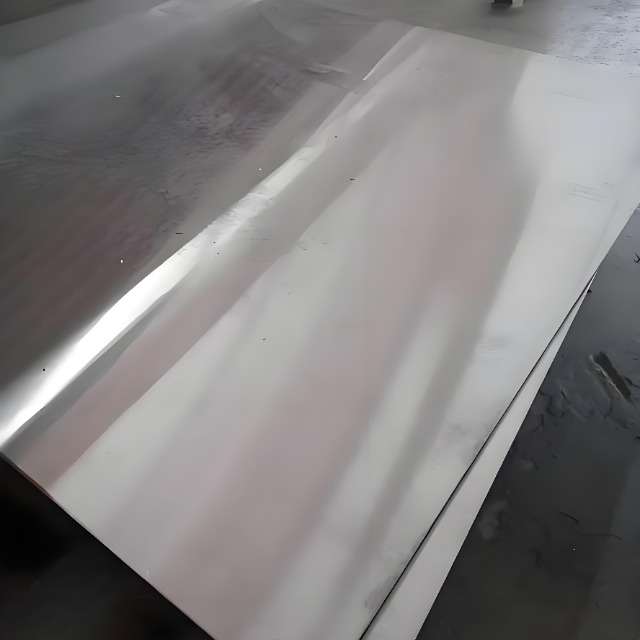
Engineers must specify the correct physical form factor early in the design phase. Dimensional thickness dictates your entire fabrication approach. Choosing between thick plates and thin sheets changes everything from structural mass to welding procedures.
Industry standards define plate dimensions as any flat metal thicker than 3/16 inch or 4.8mm. You need plate sections for serious load-bearing capabilities. Extreme physical stress demands substantial structural mass. Massive pressure vessels, deep-water marine components, and heavy structural supports rely on solid Inconel 625 plate. It holds immense physical pressure independently. It never requires a secondary backing material to maintain structural integrity.
Conversely, sheet metals measure less than 3/16 inch thick. You use sheet formats primarily for surface protection. Heat exchanger plates, massive vessel cladding, and ducting linings utilize these thin gauges. Structural mass is less critical here. You only need the surface chemical resistance to protect the underlying infrastructure. Often, engineers design a hybrid system. They will pair a cheaper carbon steel backing plate alongside a thin Hastelloy liner. Selecting an Inconel Plate/Sheet versus a Hastelloy liner alters your project design parameters completely.
Fabricators face daily struggles when machining and joining superalloys. You need practical strategies to avoid ruined parts. Ignoring shop-floor realities leads directly to broken tooling and blown production budgets.
Both materials exhibit rapid work-hardening rates. The metal literally becomes harder as the cutting tool strikes the surface. Hastelloy contains more Molybdenum. This specific element makes the alloy slightly "gummier" during fabrication. It generates excessive heat and destroys cutting edges faster than Inconel. Machinists must adapt their standard techniques.
Use highly rigid tooling setups to minimize vibration and chatter.
Maintain positive rake angles on all cutting inserts to slice cleanly.
Apply generous, high-pressure coolant directly to the active cutting zone.
Keep feed rates consistent to prevent rapid surface glazing.
Both superalloys offer excellent overall weldability. However, you must match the filler metals exactly to the base material. Using ERNiCrMo-3 filler metal remains strictly mandatory when welding Inconel 625. Hot cracking represents a serious risk during multi-pass welds. You must strictly control your interpass temperatures. Keep the weld zone cool before applying the next pass to prevent micro-fissures.
Purchasing these materials requires careful market navigation. You need realistic lead times and absolute quality guarantees. Counterfeit alloys exist in the global supply chain, making verifiable sourcing critical.
Distributors generally stock Inconel widely across global warehouses. Standard plate dimensions sit ready on distributor shelves. This broad availability leads to faster procurement for urgent structural fixes. You can easily locate standard plate sizes when an emergency repair strikes your facility.
Hastelloy alloys typically command a noticeably higher price premium. The specific elemental costs for heavy additions of Tungsten and Molybdenum drive this relative expense. Mills also produce Hastelloy in lower overall volumes. Market fluctuations in raw Nickel and Molybdenum dictate the exact daily margins between these two options.
Counterfeit or poorly mixed materials cause sudden disasters. You must demand verifiable Material Test Reports (MTRs) for every delivery. Ensure strict compliance with recognized ASTM standards to protect your liability.
Verify full ASTM B443 compliance for all incoming Inconel deliveries.
Demand verified ASTM B575 certifications for Hastelloy sheet metals.
Cross-reference the printed heat numbers on the MTR directly against the physical metal stamp.
Engineers must balance structural integrity against extreme chemical resistance. The metallurgical differences between Chromium-heavy alloys and Molybdenum-heavy alloys define their ultimate purpose. We have consolidated this logic into a simple decision matrix below.
| If your engineering goal is... | Then you should specify... |
|---|---|
| Structural integrity under stress at 1500°F | Inconel 625 Plate |
| Lining a massive vat of hydrochloric acid | Hastelloy Sheet |
| Heavy load-bearing marine propulsion parts | Inconel 625 Plate |
| Surface protection inside chemical scrubbers | Hastelloy Sheet |
Here are your immediate next steps:
Evaluate your primary failure mode (heat versus wet corrosion) before shortlisting an alloy.
Match material thickness strictly to your standalone load-bearing requirements.
Prepare your machine shop for rapid tool wear, slow feed rates, and rigid setups.
Request a formal technical consultation or submit a CAD drawing for an accurate tooling estimate.
Request current MTRs and lead times for specific plate and sheet dimensions to secure your supply chain.
A: We do not recommend it for high concentrations or elevated temperatures. Hastelloy C-276 provides significantly superior resistance in aggressive hydrochloric acid. Inconel will likely experience rapid localized pitting under these extreme wet conditions.
A: Yes, it is significantly harder to machine. You should expect much lower cutting speeds. Your tooling budgets will increase due to rapid work hardening. The material requires highly rigid setups and constant feed rates to prevent surface glazing.
A: Hastelloy typically commands a higher relative premium. The specific elemental costs for Tungsten and higher Molybdenum drive this expense. Lower overall production volumes also increase the baseline cost. Global market fluctuations in Nickel and Moly dictate the exact daily margins.
A: Yes, dissimilar metal welding is entirely possible. You must use the correct over-alloyed filler metal to ensure structural joint integrity. However, it requires strict metallurgical evaluation. You must analyze the operating environment carefully to prevent galvanic corrosion between the two different alloys.


