- All
- Product Name
- Product Keyword
- Product Model
- Product Summary
- Product Description
- Multi Field Search
English


Views: 0 Author: Site Editor Publish Time: 2026-09-14 Origin: Site


Specifying high-performance superalloys for extreme environments requires exact adherence to metallurgical standards. Minor deviations in material certification often lead to catastrophic failures or regulatory penalties. Engineering and procurement teams frequently encounter overlapping specifications when sourcing an inconel 625 plate. Deciding between ASTM B443 and ASME SB443 dictates material compliance for specific applications like pressure vessels. It also impacts project timelines, fabrication workflows, and audit readiness. This guide provides a technical evaluation of ASTM B443 and ASME SB443. We detail their structural differences, compliance requirements, and risk mitigation strategies. You will learn how to ensure the correct specification is selected for your next fabrication project without overspending on unnecessary administrative overhead.
Baseline Parity: Both ASTM B443 and ASME SB443 govern the chemical and mechanical properties of UNS N06625 Nickel Alloy Plate, and physical differences between the two are often negligible.
Application-Specific Compliance: ASTM B443 is the standard for general industrial and structural applications, whereas ASME SB443 is strictly mandated for components falling under the Boiler and Pressure Vessel Code (BPVC).
Documentation Rigor: ASME SB443 requires enhanced traceability, rigorous Mill Test Reports (MTRs), and specific quality assurance frameworks that exceed general ASTM requirements.
Procurement Strategy: Sourcing dual-certified (ASTM/ASME) Inconel 625 Plate/Sheet is a standard industry practice that mitigates compliance risks and simplifies inventory management, though it requires strict vendor verification.
The foundation of this superalloy is a robust nickel-chromium matrix heavily fortified by molybdenum and niobium. Nickel typically makes up a minimum of 58% of the alloy, providing the base resistance to chloride-ion stress-corrosion cracking. Chromium ranges between 20% and 23%, delivering exceptional defense against oxidizing environments. Molybdenum accounts for 8% to 10%, which directly combats pitting and crevice corrosion. Niobium, combined with tantalum, sits between 3.15% and 4.15%. Specifying a UNS N06625 Nickel Alloy Plate guarantees this exact chemical balance regardless of the governing standard.
This specific chemistry enables high tensile strength through solid solution stiffening. The atomic radius difference between nickel, molybdenum, and niobium creates intentional lattice strain within the metal's crystalline structure. This strain impedes dislocation movement. Fabricators do not need to apply a strengthening heat treatment to achieve these mechanical properties. The inherent strength simplifies downstream processing and welding operations. The material retains its structural integrity from cryogenic temperatures up to 1800°F (982°C).
| Element | Minimum Percentage (%) | Maximum Percentage (%) |
|---|---|---|
| Nickel (Ni) | 58.0 | Balance |
| Chromium (Cr) | 20.0 | 23.0 |
| Molybdenum (Mo) | 8.0 | 10.0 |
| Niobium + Tantalum (Nb + Ta) | 3.15 | 4.15 |
| Iron (Fe) | -- | 5.0 |
| Carbon (C) | -- | 0.10 |
Chemical composition directly dictates performance outcomes in corrosive environments. Engineers evaluate this using the Pitting Resistance Equivalent Number (PREN). For this alloy, the PREN routinely exceeds 45, placing it in the top tier of corrosion-resistant materials. The exceptionally high nickel content drives resistance to chloride-ion stress-corrosion cracking. This makes the alloy virtually immune to cracking in saline and seawater applications. Chromium provides resistance to oxidizing environments like nitric acid.
Molybdenum delivers exceptional defense against non-oxidizing environments and localized pitting. Niobium stabilizes the alloy against sensitization during welding. This prevents subsequent intergranular cracking in the heat-affected zone (HAZ). These combined elements create a material capable of surviving harsh chemical processing environments. It routinely handles phosphoric acid, mixed acid solutions, and sour gas environments containing hydrogen sulfide. Marine engineers specify this alloy for exhaust systems, propeller blades, and submarine auxiliary motors. The corrosion resistance remains consistent whether the material carries an ASTM or ASME certification.
The UNS N06625 designation applies across various physical forms. Mills produce this alloy as forgings, bar, wire, pipe, and tube. This evaluation focuses specifically on flat-rolled products. Plate is defined as material 3/16 inch (4.76 mm) and over in thickness. Sheet is defined as material under 3/16 inch in thickness and 24 inches (610 mm) and over in width. Strip applies to cold-rolled material under 3/16 inch thick and under 24 inches wide.
The governing standards dictate the dimensional tolerances, flatness requirements, and edge conditions for these specific flat-rolled forms. A standard 48-inch by 96-inch plate has specific camber and out-of-flatness limits that mills must meet before shipping. Understanding these definitions prevents procurement errors when ordering raw materials for fabrication. Ordering sheet when the structural design requires plate thickness will result in immediate material rejection on the shop floor.
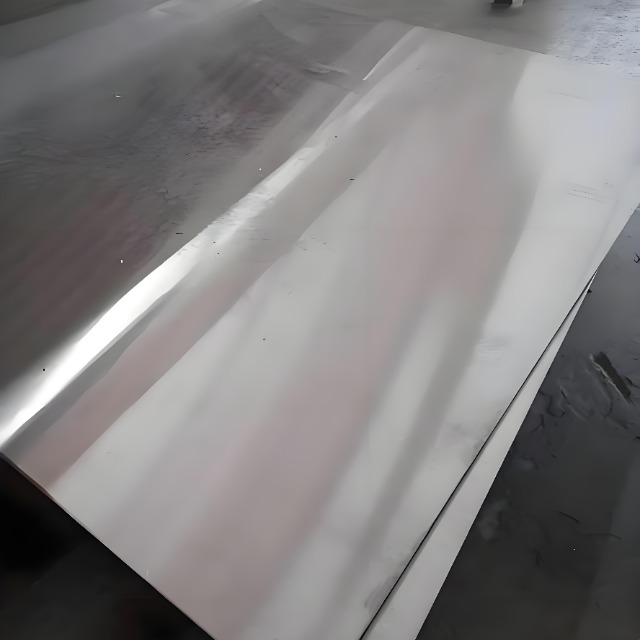
ASTM B443 serves as the primary specification covering Inconel 625 Plate/Sheet, strip, and coil. The American Society for Testing and Materials (ASTM) designed this standard to unify manufacturing parameters across different mills. It standardizes permissible variations in thickness, width, length, and weight. The standard outlines specific edge conditions, ranging from slit edges to sheared or machined edges.
ASTM B443 ensures that a plate purchased from a mill in North America matches the physical dimensions of a plate rolled in Europe. It provides the baseline geometric and physical expectations for general industrial fabrication. This standard does not dictate how the material is used. It only dictates how the material is manufactured, sampled, and tested at the mill level before it reaches the distributor or fabricator.
Mills must execute strict baseline tests to claim ASTM B443 compliance. Chemical analysis verifies that the melt falls within the precise UNS N06625 limits. Mechanical testing confirms the physical capabilities of the rolled plate. The standard mandates tension testing to determine tensile strength, yield strength, and elongation. These tests must follow established procedures outlined in ASTM E8.
The standard recognizes two distinct conditions for the material. Grade 1 is annealed and used for applications operating up to 1100°F (593°C). Grade 2 is solution annealed and specified for applications operating above 1100°F where creep and rupture resistance are required. The mechanical property minimums shift depending on the grade specified.
| Property | Grade 1 (Annealed) | Grade 2 (Solution Annealed) |
|---|---|---|
| Tensile Strength (min) | 120,000 psi (827 MPa) | 100,000 psi (690 MPa) |
| Yield Strength (min) | 60,000 psi (414 MPa) | 40,000 psi (276 MPa) |
| Elongation in 2 inches (min) | 30% | 30% |
Procurement teams often confuse ASTM B443 with related standards. This confusion leads to costly procurement errors and project delays. ASTM B443 applies exclusively to plate, sheet, and strip. ASTM B444 governs seamless pipe and tube. ASTM B446 covers rod and bar stock. ASTM B704 and B705 apply to welded tube and pipe, respectively.
Specifying ASTM B446 when a flat plate is required will result in rejected purchase orders or incorrect material deliveries. Engineers must explicitly link the product form to the correct ASTM standard on all technical drawings and purchase requisitions. Maintaining this discipline ensures smooth supply chain operations and prevents material quarantine upon receipt at the fabrication facility.
The aerospace industry utilizes a parallel specification known as AMS 5599. This standard covers sheet, strip, and plate used in aerospace applications. AMS 5599 shares the same fundamental chemistry and mechanical property minimums as ASTM B443. Aerospace standards impose tighter controls on melting practices, grain size, and ultrasonic inspection.
AMS 5599 often requires Vacuum Induction Melting (VIM) followed by Vacuum Arc Remelting (VAR) to ensure extreme purity and eliminate non-metallic inclusions. ASTM B443 permits standard air melting practices, though many modern mills use advanced melting regardless. Fabricators should only specify AMS 5599 when building flight-critical hardware, engine exhaust systems, or thrust reversers. Specifying AMS 5599 for a ground-based industrial tank unnecessarily increases material costs and extends lead times.
ASTM B443 is entirely sufficient for a wide range of demanding applications. Marine exhaust systems rely on this standard for long-term survival in wet, salty environments. Non-pressurized chemical processing tanks use ASTM B443 plates to resist aggressive acids. Structural components in offshore oil rigs utilize the material's high yield strength and corrosion resistance.
Flare stacks, pollution control equipment, and industrial furnace components also fall under this specification. If the application does not involve containing high-pressure gases or liquids under regulatory oversight, ASTM B443 provides the necessary physical performance. It delivers this performance without the added administrative burden and cost associated with pressure vessel codes.
The American Society of Mechanical Engineers (ASME) governs the design, fabrication, and inspection of pressure vessels. ASME does not write material standards from scratch. It adopts existing ASTM standards and modifies them for high-risk applications under BPVC Section II, Part B. When ASME adopts ASTM B443, it becomes ASME SB443.
The "S" denotes ASME's endorsement for use in Boiler and Pressure Vessel Code construction. ASME reviews the ASTM standard to ensure it meets the strict safety factors required for pressure containment. In many cases, the text of ASME SB443 is identical to ASTM B443. The application of the standard shifts from general manufacturing to highly regulated, safety-critical engineering.
ASME SB443 demands rigorous administrative and testing oversight. The standard requires strict material traceability from the initial melt to the final rolled plate. Every piece of material must carry a unique heat number stamped or stenciled onto the surface. This number tracks the plate back to its specific batch of liquid metal at the mill.
Fabricators must maintain this traceability throughout the cutting, forming, and welding processes. If a plate is cut into four pieces, the heat number must be physically transferred to all four pieces before the cut is made. ASME SB443 often requires more frequent mechanical testing per heat lot compared to general commercial standards. Quality assurance frameworks dictate exactly how this material is handled, inspected, and documented on the shop floor.
Compliance with ASME SB443 is non-negotiable for specific industries. Pressure vessels, heat exchangers, and steam generators must use ASME-certified materials to receive a U-Stamp. Nuclear power applications require even stricter adherence to these codes under ASME Section III. Failure in a high-pressure system poses severe safety risks, including catastrophic explosions and toxic releases.
Using standard ASTM B443 material in an ASME-stamped pressure vessel violates the code. This violation results in failed inspections by the Authorized Inspector (AI), rejected equipment, and massive liability exposure. Insurance companies and regulatory bodies mandate strict adherence to ASME material specifications. Engineers cannot substitute ASTM for ASME without formal recertification, which is often impossible after the material leaves the mill.
The physical plate sitting on the shop floor may be identical under both specifications. A mill often rolls a single heat of UNS N06625 that meets the physical requirements of both ASTM B443 and ASME SB443. The difference lies entirely in the certification. The product being purchased is not just the metal; it includes the verified documentation.
The outcome of purchasing ASTM B443 is a high-strength, corrosion-resistant plate suitable for general fabrication. The outcome of purchasing ASME SB443 is legal and safety compliance for pressure systems. Engineers must evaluate whether they are paying for physical performance or regulatory compliance. Over-specifying ASME SB443 for a non-pressurized structural bracket wastes project funds on unnecessary administrative overhead.
| Parameter | ASTM B443 | ASME SB443 |
|---|---|---|
| Governing Body | American Society for Testing and Materials | American Society of Mechanical Engineers |
| Primary Focus | General industrial dimensions and properties | Pressure vessel safety and compliance |
| Traceability | Standard commercial heat tracking | Strict melt-to-fabrication traceability |
| Application | Structural, marine, non-pressurized tanks | Boilers, heat exchangers, pressure vessels |
| Code Stamping | Not applicable | Required for ASME U-Stamp fabrication |
The Mill Test Report (MTR) is the definitive document proving material compliance. Procurement teams must scrutinize MTRs before accepting delivery. An MTR outlines the chemical composition, mechanical test results, heat treatment condition, and dimensional data. Receiving inspectors must verify specific data points before releasing the material to production.
Verify the heat number on the MTR matches the physical stamp on the plate.
Confirm the chemical analysis falls within the strict UNS N06625 limits.
Check that mechanical properties meet or exceed the specified grade minimums (Grade 1 vs Grade 2).
Ensure explicit statement of ASME SB443 compliance if required for pressure vessel work.
Verify the specific edition and year of the standard used for testing.
For pressure vessel applications, an MTR listing only ASTM B443 cannot be retroactively applied to an ASME requirement. Inspectors will reject the material. Reviewing the MTR ensures the yield strength, tensile strength, and elongation meet the minimum requirements for the specific design calculations used by the engineering team.
Procurement implications vary significantly between the two standards. Specifying ASME SB443 can limit the pool of qualified suppliers. Not all service centers maintain the quality control programs required to stock and distribute ASME-certified materials. This limited supply pool can increase material costs and complicate logistics.
The quality control overhead, including enhanced documentation storage and traceability audits, drives up the price of ASME-certified plates. Lead times may extend if a specific thickness of ASME SB443 plate is not readily available in domestic inventory. Standard ASTM B443 material is widely stocked and highly commoditized. Engineering teams must weigh the necessity of ASME compliance against the project's budget and schedule constraints.
The most effective procurement strategy involves sourcing dual-certified material. Modern mills routinely produce an Inconel 625 Plate that meets the requirements of both standards simultaneously. The manufacturing process is tightly controlled, allowing the material to easily pass the physical tests for both ASTM and ASME.
The mill then issues an MTR that explicitly lists both ASTM B443 and ASME SB443. This dual-certification simplifies procurement and inventory management. A fabrication shop can stock one type of plate and use it for both general structural work and pressure vessel construction. Receiving personnel must carefully review the MTR upon delivery to ensure both standards are clearly printed on the certification document.
The high value of nickel alloys makes them a target for counterfeiting. Substandard materials lead to rapid corrosion, mechanical failure, and severe safety incidents. Procurement teams must establish a rigorous framework for vetting suppliers. Purchase materials only from vendors holding current ISO 9001 certifications. Request sample MTRs before placing large orders.
Verify the origin of the melt. Materials melted in countries with strict metallurgical oversight generally offer higher reliability. Utilize independent laboratory testing to verify chemical composition and mechanical properties if the material source is unverified. Positive Material Identification (PMI) using handheld XRF analyzers provides a quick, on-site check of the alloy's basic chemistry before fabrication begins.
Regardless of the specification, fabricators face identical challenges when working with UNS N06625. The alloy exhibits a high rapid work-hardening rate. Machining requires heavy-duty equipment, rigid tooling, and positive feeds. Operators must use low surface feet per minute (SFM) and high feed rates to get the cutting tool under the work-hardened layer. Abundant sulfur-based cutting fluids prevent the material from glazing and hardening during turning or milling.
Welding requires strict cleanliness to prevent porosity. Fabricators must remove all cutting fluids, grease, and oxides from the weld joint. Use compatible filler metals, typically ERNiCrMo-3 (Alloy 625 bare wire) or ENiCrMo-3 (covered electrodes). Interpass temperatures must remain below 300°F (150°C) to prevent micro-fissuring in the weld metal. Both ASTM and ASME materials demand these exact same fabrication controls to maintain their corrosion resistance and mechanical integrity after welding.
Audit current project requirements against BPVC guidelines to determine if ASME certification is legally mandated for your specific application.
Request and review sample MTRs from potential suppliers to verify their ability to provide correct, traceable documentation.
Prioritize vendors offering dual-certified plates to maximize inventory flexibility and reduce procurement complexity across multiple projects.
Implement inbound material inspection protocols, including MTR verification and PMI testing, before releasing plates to the shop floor.
A: The primary difference is administrative and regulatory. ASTM B443 is the standard for general industrial applications, defining dimensions and mechanical properties. ASME SB443 is the identical standard adopted and mandated by the Boiler and Pressure Vessel Code (BPVC) for use in high-pressure, safety-critical applications requiring strict traceability.
A: Yes. It is standard industry practice for mills to produce plates that meet the physical requirements of both standards. The Mill Test Report (MTR) will explicitly list both ASTM B443 and ASME SB443, allowing the material to be used in both general and pressure vessel applications.
A: No. Both specifications govern UNS N06625, meaning the chemical composition limits for nickel, chromium, molybdenum, and niobium are identical. The difference lies in the documentation, traceability, and intended application, not the chemistry.
A: Any component that falls under the jurisdiction of the ASME Boiler and Pressure Vessel Code requires ASME SB443. This includes pressure vessels, heat exchangers, steam generators, and specialized piping systems in chemical plants and nuclear facilities.
A: These standards cover different product forms of the same alloy. ASTM B443 covers flat-rolled products like plate, sheet, and strip. ASTM B444 governs seamless pipe and tube. ASTM B446 specifies requirements for rod and bar stock.
A: A verified Mill Test Report (MTR) is required. The MTR must explicitly state compliance with ASME SB443, list the heat number for traceability, and provide the actual chemical analysis and mechanical test results proving the material meets the code requirements.


