- All
- Product Name
- Product Keyword
- Product Model
- Product Summary
- Product Description
- Multi Field Search
English


Views: 0 Author: Site Editor Publish Time: 2026-07-13 Origin: Site


Material selection in extreme engineering environments dictates the line between sustained operational success and catastrophic component failure. In sectors like aerospace, marine engineering, and chemical processing, specifying the wrong metal carries severe consequences. Engineers face a constant challenge: over-specifying leads to unnecessary material costs, while under-specifying risks downtime and system collapse. Navigating the choices among high-performance nickel superalloys requires precise technical data and a clear understanding of metallurgical behaviors under stress.
Inconel 625 and 718 stand out within the broader family of nickel-chromium alloys. They offer distinct performance upgrades over standard grades like Inconel 600, primarily through advanced strengthening mechanisms and superior resistance to harsh elements. This guide delivers a strictly technical, evidence-based comparison of Inconel 625 and 718. By examining their chemical compositions, mechanical properties, and fabrication behaviors, engineers can make accurate material specification and procurement decisions for their next critical project.
Primary Divergence: Inconel 625 prioritizes severe corrosion resistance (due to ~9% Molybdenum), while Inconel 718 prioritizes high tensile and yield strength at elevated temperatures via precipitation hardening.
Fabrication Realities: Both alloys present distinct machining challenges; however, 625 offers superior weldability without requiring complex post-weld heat treatments.
Application Alignment: Specify 625 for marine and harsh chemical environments; specify 718 for gas turbines, aerospace engine components, and high-stress structural applications.
Cost vs. Value: Material costs fluctuate based on alloy composition (such as high molybdenum and nickel content) and market availability; lifecycle longevity must account for machining time, tooling wear, and replacement intervals.
Selecting the right superalloy begins with mapping the exact temperature ranges of the application. Components may face cryogenic conditions down to -250°F or continuous exposure to temperatures exceeding 1300°F. The material must maintain its structural integrity across these extremes without degrading, embrittling, or losing its load-bearing capacity. Identifying specific corrosive agents is equally critical. Applications involving seawater, acidic compounds, or sour gas demand specific elemental compositions to prevent rapid material degradation. Engineers must evaluate the exact concentration, flow rate, and state of these corrosive agents to match them with the correct alloy profile. For instance, stagnant seawater presents a different localized corrosion threat than high-velocity aerated seawater, dictating different material surface requirements.
Furthermore, thermal cycling introduces expansion and contraction stresses that can lead to premature fatigue failure. When a system rapidly heats and cools, the chosen alloy must possess a coefficient of thermal expansion compatible with adjacent components to prevent warping or cracking at the joints. You must also consider the presence of abrasive particulates in the fluid stream, which can strip away protective oxide layers and accelerate erosion-corrosion mechanisms.
Mechanical load requirements dictate the baseline necessity for tensile strength, yield strength, and creep resistance. Components under continuous operational stress cannot afford unexpected deformation. Engineers must establish acceptable thresholds for thermal expansion and fatigue over the component's expected lifecycle. High-stress environments require materials that resist elastic deformation while supporting heavy loads at elevated temperatures. Defining these parameters early prevents structural failures in critical load-bearing applications.
To accurately define structural requirements, consider the following load factors:
Static Tensile Loads: The constant pulling force exerted on the component during normal operation.
Dynamic Fatigue Loads: Cyclic stresses caused by vibration, rotation, or fluctuating pressures.
Creep Deformation: The slow, progressive permanent deformation under constant stress at elevated temperatures.
Impact Resistance: The ability to absorb sudden shock loads without fracturing, especially critical in cryogenic environments.
Shear Stress: Forces acting parallel to the cross-section, common in fasteners and rotating shafts.
Establishing a baseline comparison helps clarify why engineers upgrade to specific grades. Standard Inconel 600 is a solid-solution alloy with no molybdenum, offering basic high-temperature oxidation resistance. It serves well in furnace components and heat-treating baskets. However, it lacks the advanced strength and localized corrosion resistance required for extreme environments. Engineers upgrade to 625 when severe corrosion resistance is the primary requirement, leveraging its high molybdenum content to combat pitting and crevice corrosion. Conversely, they specify 718 when mechanical strength and high-temperature load-bearing capabilities are paramount, utilizing its precipitation-hardening characteristics to support massive structural loads in aerospace applications.
The chemical makeup of Inconel 625 heavily influences its performance in harsh environments. It features approximately 9% molybdenum, a high nickel and chromium content, and low iron (typically under 5%). This specific composition relies on solid-solution stiffening. The molybdenum and niobium act directly on the nickel-chromium matrix, hardening the material without the need for complex strengthening heat treatments. The atomic size difference between these alloying elements and the base nickel creates lattice strain, which impedes dislocation movement and increases baseline strength.
This inherent strength makes an inconel 625 plate highly effective in the as-supplied condition, simplifying fabrication processes while maintaining exceptional resistance to pitting and crevice corrosion. The lack of a required precipitation-hardening cycle means fabricators can weld and form the material without worrying about post-weld strain-age cracking, a common issue in more complex superalloys.
Inconel 718 takes a different metallurgical approach. Its composition includes a lower molybdenum content (around 3%), the addition of titanium and aluminum, and a significantly higher iron content (approximately 17%). The critical element here is niobium, present at about 5%. During age hardening, niobium forms the gamma double prime ($\gamma''$) precipitate phase within the alloy matrix. This precipitation hardening process provides Inconel 718 with its exceptional mechanical strength, allowing it to withstand extreme tensile and yield stresses at high temperatures.
The precipitation of these microscopic intermetallic compounds creates severe obstacles to dislocation movement, resulting in massive increases in yield strength. However, this mechanism requires precise thermal management. If the alloy is exposed to temperatures exceeding 1300°F for prolonged periods, the gamma double prime precipitates can coarsen and transform into the more stable but less strengthening delta phase, leading to a permanent loss of mechanical properties.
The elemental profiles of these two alloys dictate their respective strengths and limitations. The variance in iron and molybdenum is particularly impactful. Inconel 625's high molybdenum content drives its superior corrosion resistance but also influences raw material availability and processing requirements. Inconel 718's higher iron content and reliance on precipitation hardening make it structurally superior for high-stress applications but slightly more susceptible to localized corrosion in severe chemical environments compared to 625.
| Element | Inconel 625 (%) | Inconel 718 (%) |
|---|---|---|
| Nickel (Ni) | 58.0 min | 50.0 - 55.0 |
| Chromium (Cr) | 20.0 - 23.0 | 17.0 - 21.0 |
| Molybdenum (Mo) | 8.0 - 10.0 | 2.8 - 3.3 |
| Niobium (Nb) + Tantalum (Ta) | 3.15 - 4.15 | 4.75 - 5.50 |
| Iron (Fe) | 5.0 max | Balance (~17.0) |
| Titanium (Ti) | 0.40 max | 0.65 - 1.15 |
| Aluminum (Al) | 0.40 max | 0.20 - 0.80 |
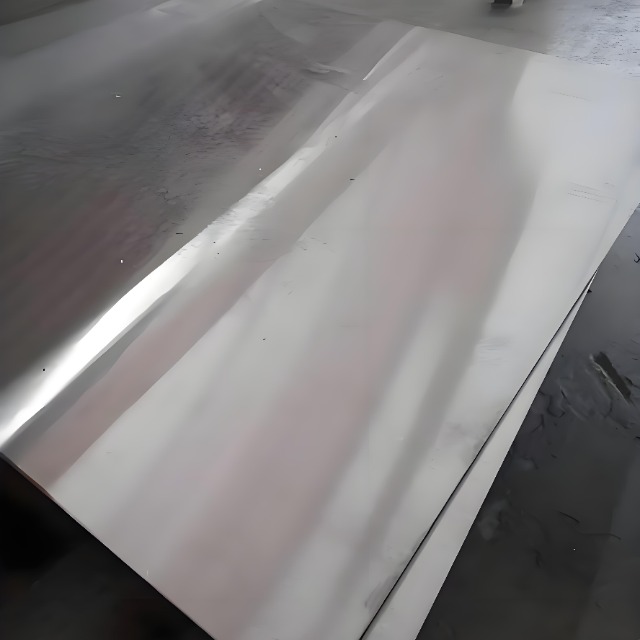
Analyzing both alloys across critical engineering dimensions provides a clear framework for selection. The following matrix outlines the baseline properties for both materials under standard conditions. Engineers must use these figures as a starting point, recognizing that specific mill runs, heat treatments, and product forms will introduce slight variations.
| Specification Dimension | Inconel 625 (Annealed) | Inconel 718 (Age-Hardened) |
|---|---|---|
| 1. Density | ~8.44 g/cm³ | ~8.19 g/cm³ |
| 2. Tensile Strength (Room Temp) | 120 - 160 ksi | 180 - 210 ksi |
| 3. Yield Strength (0.2% Offset) | 60 - 100 ksi | 150 - 180 ksi |
| 4. Elongation at Break | 30 - 60% | 12 - 25% |
| 5. Hardness (Rockwell) | Rb 85 - 100 | Rc 36 - 44 |
| 6. Melting Range | 2350 - 2460°F | 2300 - 2437°F |
| 7. Coefficient of Thermal Expansion | 7.1 µin/in-°F (at 70-200°F) | 7.2 µin/in-°F (at 70-200°F) |
| 8. Thermal Conductivity | 68 Btu-in/ft²-hr-°F | 79 Btu-in/ft²-hr-°F |
| 9. Modulus of Elasticity | 29.8 x 10⁶ psi | 29.0 x 10⁶ psi |
| 10. Max Continuous Service Temp | ~1800°F (Oxidation) | ~1300°F (Structural) |
Comparing the baseline strengths reveals a significant divergence in load-bearing capabilities. Heat-treated 718 possesses an extreme advantage in both tensile and yield strength over annealed 625. This makes 718 the mandatory choice for rotating components, fasteners, and high-stress structural parts where yielding would cause catastrophic interference. When evaluating hardness and resistance to elastic deformation, 718 exhibits marginally higher rigidity. This rigidity ensures components maintain their dimensional tolerances under heavy mechanical loads, whereas 625 offers more ductility, which is highly beneficial for complex forming operations like deep drawing or spinning.
The yield strength of 718 can exceed 150 ksi in the fully aged condition, nearly double that of annealed 625. This allows engineers to design thinner, lighter components without sacrificing structural safety margins. However, this high strength comes at the cost of formability. Attempting to cold-form fully aged 718 will almost certainly result in cracking or severe tool breakage.
Thermal management is a critical factor in high-temperature applications. Inconel 718 holds a slight advantage in thermal conductivity over 625, allowing for marginally better heat dissipation in engine components. However, the most crucial metric is creep-rupture strength. At temperatures exceeding 1200°F (650°C), 718 vastly outperforms 625 in maintaining structural load without permanent deformation. This high-temperature stability is the primary reason 718 dominates gas turbine and aerospace engine specifications.
Creep is the silent killer in high-temperature engineering. A component may easily support a load at room temperature, but under the same load at 1200°F, the material will slowly stretch over hundreds of hours until it ruptures. The gamma double prime precipitates in 718 lock the grain boundaries in place, drastically slowing this creep mechanism. Inconel 625, relying only on solid-solution strengthening, will experience higher creep rates under identical conditions.
Density differences, while seemingly small, impact large-scale engineering projects. Inconel 718 is marginally lighter at approximately 8.19 g/cm³, compared to Inconel 625 at roughly 8.44 g/cm³. When purchasing large volumes of inconel plate/sheet for aerospace structures or weight-sensitive marine vessels, this weight variance accumulates. Engineers must calculate the total mass impact of the chosen material, balancing the need for corrosion resistance against structural weight limits.
For example, in a large exhaust ducting system requiring hundreds of square feet of material, selecting 718 over 625 could save hundreds of pounds. This weight reduction translates directly to increased payload capacity or improved fuel efficiency in aerospace applications. However, if that ducting is exposed to highly corrosive exhaust gases, the heavier 625 might still be the required choice to prevent premature failure.
For environments submerged in seawater or exposed to harsh acids, an inconel 625 plate remains the industry standard. Its high molybdenum content provides unparalleled resistance to pitting, crevice corrosion, and chloride-ion stress-corrosion cracking. In offshore oil and gas platforms, 625 is routinely used for splash zone sheathing and subsea piping where the combination of saltwater, oxygen, and mechanical stress destroys lesser alloys. In contrast, while 718 offers good general corrosion resistance, it is more susceptible to localized attack in severe acidic or marine environments. The lower molybdenum and higher iron content in 718 compromise its ability to withstand aggressive aqueous corrosion over extended periods.
The Pitting Resistance Equivalent Number (PREN) is a useful metric here. Inconel 625 typically boasts a PREN over 45, placing it in the top tier of corrosion-resistant alloys. Inconel 718, with its lower molybdenum and chromium levels, has a significantly lower PREN, making it vulnerable to pitting in stagnant chloride solutions.
Both alloys perform exceptionally well during prolonged exposure to elevated temperatures in oxidizing environments. They form protective chromium oxide layers that resist scaling and carburization. However, 625 generally maintains better surface stability at extremely high temperatures (up to 1800°F) where structural load is not the primary concern. Inconel 718 is typically restricted to 1300°F for structural applications, as its strengthening precipitates begin to over-age and lose effectiveness beyond this threshold, though its oxidation resistance remains robust up to 1800°F.
In environments containing sulfur compounds, such as sour gas processing or certain combustion exhausts, both alloys can suffer from sulfidation attack. The high nickel content makes them susceptible to forming low-melting-point nickel sulfides if the protective oxide layer is breached. Proper environmental control and surface treatments are necessary when deploying these alloys in high-sulfur atmospheres.
Fabricating any high-performance nickel alloy requires specialized handling. Both 625 and 718 exhibit extreme work-hardening rates during cold-forming and hot-forming operations. When stamping or heavily deforming an inconel plate/sheet, the material hardens rapidly, requiring robust equipment and careful process control. Intermediate annealing cycles are often mandatory to restore ductility and prevent cracking during deep drawing or complex forming sequences.
Press brakes and stamping presses must have significantly higher tonnage capacities compared to those used for standard austenitic stainless steels. Springback is also a major issue; the high yield strength of these alloys means they will resist permanent deformation and attempt to return to their original shape. Over-bending is required to achieve the final desired angle, and tooling must be designed to accommodate this severe springback.
Weldability is a major differentiator between these two grades. Inconel 625 offers exceptional weldability and resists post-weld cracking in the as-welded condition. It does not require mandatory post-weld heat treatments to maintain its corrosion resistance or baseline strength. It is frequently welded using ERNiCrMo-3 filler metal, which matches the base material's composition and provides excellent joint integrity.
Conversely, Inconel 718 features a sluggish precipitation hardening response. This unique characteristic makes it highly resistant to strain-age cracking during post-weld heat treatment, a massive improvement over older precipitation-hardened alloys like Waspaloy or Rene 41. However, to achieve its maximum mechanical properties, 718 requires a strict, multi-step age-hardening thermal cycle after welding. This typically involves heating the assembly to 1325°F for 8 hours, furnace cooling to 1150°F, holding for another 8 hours, and then air cooling. This complex PWHT adds significant time and cost to the fabrication process.
Machining any inconel alloy presents significant challenges due to rapid work hardening and the presence of abrasive carbides. Poor machinability leads to rapid tool wear, high heat generation, and compromised surface finishes if not managed correctly. The cutting tool must constantly stay ahead of the work-hardened zone created by the previous pass.
Concrete mitigation strategies are essential for successful machining:
Utilize highly rigid machine setups to prevent vibration and chatter, which instantly destroy tool edges.
Employ carbide or ceramic inserts with positive rake angles to shear the metal cleanly rather than pushing it.
Maintain slow, consistent cutting speeds with continuous heavy feeds to ensure the cutting edge gets under the work-hardened layer.
Use copious amounts of high-pressure, water-based coolant to manage the extreme heat generated at the cutting zone.
Never allow the tool to dwell or rub against the workpiece, as this will instantly work-harden the surface and ruin subsequent passes.
Actionable Next Steps:
Map the exact maximum operating temperatures and continuous stress loads of your application before selecting a grade.
Evaluate the specific corrosive agents present in your environment to determine if the high molybdenum content of 625 is mandatory.
Consult with your fabrication team to assess machining capabilities and determine if the post-weld heat treatment required for 718 is feasible within your production timeline.
Calculate the total mass impact of the required plate or sheet volume to ensure the chosen alloy aligns with project weight restrictions.
A: No, Inconel 625 is a solid-solution strengthened alloy. It achieves its strength through its chemical composition, specifically the addition of molybdenum and niobium, and cannot be strengthened through precipitation hardening heat treatments.
A: Inconel 718 is preferred because its precipitation-hardening mechanism provides exceptionally high tensile, yield, and creep-rupture strength at temperatures up to 1300°F, which is critical for rotating engine components.
A: Inconel 625 is highly resistant to seawater corrosion. Its high molybdenum and nickel content prevents pitting, crevice corrosion, and chloride-ion stress-corrosion cracking, making it ideal for marine applications.
A: Inconel 625 is generally easier to weld because it retains its properties in the as-welded condition and does not require complex post-weld heat treatments, unlike Inconel 718 which requires age-hardening to restore strength.
A: Inconel alloys work-harden very rapidly during machining. The cutting action hardens the surface, making subsequent cuts difficult, and the presence of hard carbides in the alloy matrix causes rapid tool wear.


