- All
- Product Name
- Product Keyword
- Product Model
- Product Summary
- Product Description
- Multi Field Search
English


Views: 0 Author: Site Editor Publish Time: 2026-07-27 Origin: Site


In high-stress industrial applications, material failure is catastrophic. Over-engineering leads to severe budget overruns, but under-specifying materials guarantees premature structural degradation. Engineering and procurement teams must balance the extreme thermal and corrosive demands of their operating environments against the physical limitations of standard metals. Selecting the wrong sheet metal results in rapid oxidation, stress-corrosion cracking, and system collapse, while choosing an overly complex superalloy for a basic application wastes critical project resources.
This guide provides a rigorous, evidence-based comparison between an inconel 625 sheet and standard stainless steel alternatives like 304 and 316. We detail metallurgical realities, mechanical thresholds, and fabrication risks to drive accurate specification. You will learn exactly where standard stainless steel reaches its limits and when upgrading to a specialized superalloy becomes an absolute engineering necessity for your specific operational environment.
Thermal Thresholds: Inconel 625 maintains structural integrity and resists oxidation at extreme temperatures (above 1000°F / 538°C) where standard stainless steel rapidly degrades.
Corrosion Resistance: The high nickel and molybdenum content in Inconel 625 provides superior resistance to chloride-ion stress-corrosion cracking and pitting compared to 300-series stainless steel.
Fabrication Complexity: This inconel alloy requires specialized tooling, slower machining speeds, and strict welding protocols due to rapid work-hardening, increasing secondary manufacturing demands.
Selecting the correct sheet metal requires a precise understanding of the physical environment. You must identify the exact continuous operating temperatures and peak thermal spikes the material will endure. Chemical exposures dictate material choice heavily. Environments rich in chlorides, acids, or marine salt spray rapidly attack standard metals, requiring specialized alloys to prevent premature failure. You cannot rely on guesswork when specifying materials for pressure vessels or exhaust systems.
Mechanical load requirements dictate the necessary tensile and yield strength at both ambient and peak operating temperatures. A material may perform perfectly at room temperature but lose all structural integrity when exposed to industrial furnace heat. Regulatory and compliance standards often force specific material choices. Required material certifications, such as ASTM B443 for Inconel 625 or ASME BPVC compliance, are necessary for specific pressure vessel and aerospace applications. You must map these requirements before evaluating any metal.
Engineers must also account for the physical constraints of the installation site. Weight restrictions in aerospace or offshore platforms often push designs toward thinner gauges of higher-strength materials. A thinner inconel plate/sheet might provide the same structural support as a massive slab of stainless steel, altering the entire design envelope. You have to evaluate the entire system, including support structures and thermal expansion allowances, to make an informed decision.
Understanding the chemical makeup of these metals explains their divergent performance capabilities. The base matrix of Inconel 625 relies on a nickel-chromium-molybdenum foundation. This specific combination provides exceptional resistance to a wide range of severely corrosive environments. The strengthening mechanism sets it apart from other metals. The addition of niobium acts with molybdenum to stiffen the alloy matrix. This provides high strength without requiring a complex strengthening heat treatment.
Standard stainless steel utilizes an iron-based matrix with significant chromium, typically a minimum of 10.5 percent. It also contains varying levels of nickel to stabilize the austenitic structure. Grade 316 includes the addition of molybdenum. This specific addition enhances resistance to pitting and crevice corrosion compared to the standard 304 grade. However, it still relies on iron, which fundamentally limits its performance in extreme environments.
| Alloy Grade | Nickel (Ni) % | Chromium (Cr) % | Molybdenum (Mo) % | Iron (Fe) % | Other Key Elements |
|---|---|---|---|---|---|
| Inconel 625 | 58.0 min | 20.0 - 23.0 | 8.0 - 10.0 | 5.0 max | Niobium (Nb) 3.15 - 4.15 |
| 304 Stainless | 8.0 - 10.5 | 18.0 - 20.0 | N/A | Balance | Carbon (C) 0.08 max |
| 316 Stainless | 10.0 - 14.0 | 16.0 - 18.0 | 2.0 - 3.0 | Balance | Carbon (C) 0.08 max |
Tensile and yield strengths differ significantly between these materials. Inconel 625 boasts an ultimate tensile strength of roughly 120 to 140 ksi at room temperature. In contrast, 304 and 316 stainless steels typically range between 75 and 85 ksi. When evaluating ductility and elongation, standard stainless steel offers superior formability limits for basic sheet and plate formats. Superalloys require more force to bend and form due to their inherent stiffness.
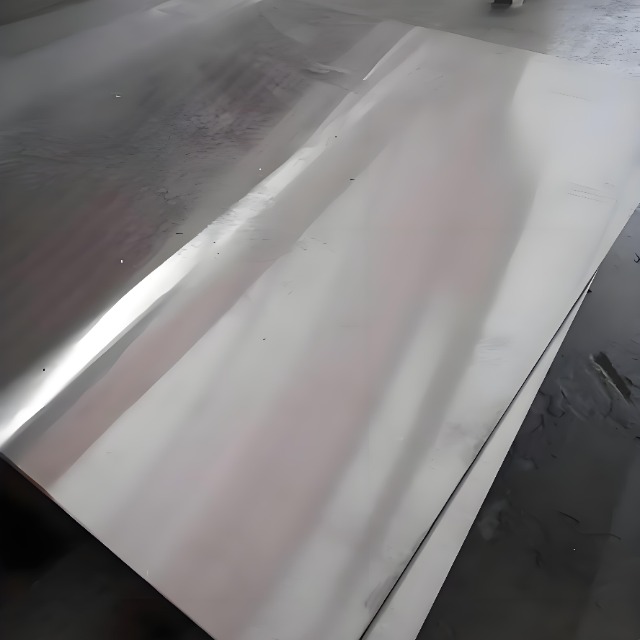
Inconel 625 retains high tensile strength and resists creep deformation at temperatures up to 1800°F (982°C). This stability allows it to bear mechanical loads inside furnaces and exhaust systems without stretching or deforming over time. Stainless steel experiences a rapid drop-off in mechanical strength above 1000°F (538°C). It becomes highly susceptible to creep, making it unsafe for load-bearing applications in extreme heat. You cannot use 316 stainless for a turbine exhaust duct without risking a catastrophic rupture.
Room-temperature yield and tensile strength relationships present an interesting nuance. While Inconel 625 is inherently strong, certain highly cold-worked stainless steels exhibit competitive strength-to-weight ratios at room temperature. For less critical applications, heavily rolled stainless steel can meet mechanical requirements effectively. In sub-zero and cryogenic environments, both materials retain excellent ductility and fracture toughness. High-nickel alloys often provide superior impact strength stability at absolute zero temperatures, preventing brittle fractures in liquid natural gas (LNG) containment systems.
Under cyclic heating and cooling, metals expand, contract, and oxidize. Inconel 625 resists scaling and oxidation rates far better than standard stainless grades. The chromium and molybdenum form a protective oxide layer that remains stable during rapid temperature shifts. Thermal expansion coefficients also matter. When combining different metals in high-heat systems, mismatch issues cause structural warping. Stainless steel expands more than high-nickel alloys, creating stress points at welded joints.
| Material | Max Continuous Operating Temp | Tensile Strength at 1000°F (538°C) | Oxidation Resistance |
|---|---|---|---|
| Inconel 625 | 1800°F (982°C) | ~105 ksi | Excellent (Stable Oxide Layer) |
| 316 Stainless | 1000°F (538°C) | ~45 ksi | Moderate (Prone to Scaling) |
| 304 Stainless | 900°F (482°C) | ~40 ksi | Low (Rapid Scaling) |
Chloride-ion stress-corrosion cracking (SCC) destroys standard metals. Stainless steel, even the marine-grade 316, remains highly vulnerable to this specific failure mode under tension in saltwater environments. The high nickel content makes Inconel 625 virtually immune to chloride-induced SCC. We measure localized corrosion resistance using the Pitting Resistance Equivalent Number (PREN). Inconel 625 boasts a PREN of approximately 45 or higher. Grade 316 stainless steel sits around 23 to 25. This massive gap illustrates why superalloys are mandatory for offshore marine ducting.
Chemical compatibility dictates material lifespan in processing plants. Inconel 625 offers an aggressive resistance profile against sulfuric, hydrochloric, and phosphoric acids under varying concentrations and temperatures. Standard stainless steel degrades rapidly when exposed to hot, concentrated organic and inorganic acids. For chemical processing vessels, specifying the correct high-nickel alloy prevents catastrophic leaks and facility shutdowns. You must match the alloy to the specific chemical concentration and temperature profile of your process.
Microbiologically influenced corrosion (MIC) presents another threat in stagnant water systems. Standard stainless steels often suffer from localized pitting when sulfate-reducing bacteria colonize the surface. The high molybdenum content in Inconel 625 provides a robust defense against MIC, making it suitable for raw seawater intake screens and ballast water treatment systems. You cannot ignore biological factors when evaluating marine environments.
Machining superalloys requires distinct operational adjustments. They exhibit rapid work-hardening characteristics during cutting. This requires rigid setups, specialized heavy-duty carbide tooling, and significantly slower feed rates to prevent tool destruction. Standard stainless grades offer relative ease of machining. They reduce machine-shop labor time and consume fewer cutting inserts per job. You must account for increased machining time when scheduling production runs with high-nickel alloys.
Springback behavior complicates the bending of thin-gauge sheets. A 0.8mm (0.0315 inch) sheet of Inconel 625 springs back aggressively after bending compared to standard stainless steel. Operators must over-bend the material to achieve precise angles. High shear strength also impacts tool life during sheet metal cutting and punching operations. Stamping dies wear out much faster when processing high-nickel alloys. You need specialized press brakes with higher tonnage ratings to form these materials accurately.
Welding Inconel 625 presents specific advantages. It offers excellent weldability and high resistance to post-weld cracking. It generally lacks the necessity for post-weld heat treatments (PWHT), saving time during fabrication. When welding thin-gauge 0.8mm sheets, heat management is critical. Techniques such as pulsed TIG (GTAW) and specialized backing gas setups prevent burn-through and warping.
Clean the joint area thoroughly with a dedicated stainless steel wire brush to remove all oxides and hydrocarbons.
Set up a high-purity argon purge on the backside of the weld to prevent atmospheric contamination and sugaring.
Select the appropriate filler metal, typically ERNiCrMo-3, ensuring it matches the base material's mechanical properties.
Utilize pulsed TIG welding parameters to minimize heat input and control the weld puddle on thin-gauge sheets.
Maintain interpass temperatures below 300°F (150°C) to prevent micro-fissuring in the heat-affected zone.
Dissimilar welding requires strict technical oversight. When joining a superalloy to a stainless steel component, you must manage galvanic corrosion risks. Filler metal choices are mandatory to ensure the weld pool mixes correctly and maintains mechanical integrity across the joint. You cannot use standard 308 or 316 filler wire when joining these two distinct metals.
Quality assurance is paramount when sourcing critical materials. You must audit any prospective inconel 625 sheet manufacturer for specific criteria. Look for ISO 9001 certifications, AS9100 for aerospace applications, and NADCAP accreditations for heat treatment and testing. Material traceability prevents catastrophic failures. Always require comprehensive Mill Test Reports (MTRs) and perform Positive Material Identification (PMI) upon delivery. This verifies the chemical composition and mechanical compliance with standards like ASTM B443 and AMS 5599.
Supply chain realities dictate project timelines. Standard stainless steel sheets are ubiquitous and available for immediate delivery from local service centers. High-performance superalloys face longer lead times. Custom thicknesses often require mill-run minimums and involve complex sourcing logistics. Plan procurement cycles months in advance to avoid halting production lines. You must build buffer stock for critical components to mitigate supply chain disruptions.
Handling and storage protocols also differ. While stainless steel is relatively forgiving, high-nickel alloys must be stored away from carbon steel to prevent cross-contamination. Iron particles embedded in the surface of an Inconel sheet will rust, compromising the material's integrity before it even enters service. You need dedicated storage racks and handling equipment to maintain material purity.
Stainless steel remains the optimal, efficient choice for low-to-moderate temperature applications with standard corrosive exposures. However, high-nickel superalloys are mandatory specifications for extreme heat, severe chemical processing, and high-stress marine environments where failure is not an option. Base your final decision on a strict matrix of peak operating temperature, the presence of chlorides or acids, and the operational environment.
Finalize your exact thermal and chemical load requirements before contacting suppliers.
Engage directly with a certified metallurgist to confirm material compatibility for your specific application.
Request comprehensive Mill Test Reports (MTRs) from your chosen manufacturer to ensure compliance.
Establish clear welding protocols and source the correct filler metals if joining dissimilar materials.
A: Yes, you can weld these dissimilar metals together. It requires specific filler metals, typically ERNiCrMo-3, to ensure a strong, crack-resistant joint. Proper joint preparation and strict heat input management are critical to prevent warping and maintain the structural integrity of both base materials during the welding process.
A: Standard stainless steel begins to experience rapid structural degradation and creep around 1000°F (538°C). Inconel 625 maintains its high tensile strength, resists creep deformation, and remains structurally stable at extreme temperatures up to 1800°F (982°C), making it suitable for furnace and exhaust applications.
A: Inconel 625 exhibits rapid work-hardening characteristics during cutting operations. This requires highly rigid machine setups, specialized heavy-duty carbide tooling, and significantly slower feed rates to prevent tool destruction. Standard stainless steel is softer and does not work-harden as aggressively, allowing for faster machining times.
A: Yes, Inconel 625 has a significantly higher ultimate tensile and yield strength at room temperature compared to standard annealed 316 stainless steel. However, heavily cold-worked stainless steel grades can sometimes bridge this strength gap for specific, less critical ambient temperature applications where extreme heat is not a factor.
A: Primary applications include aerospace exhaust systems, chemical processing vessels, offshore marine ducting, flare tips, and specialized expansion joints. It is specified wherever extreme heat, high mechanical stress, and severe corrosive environments intersect, demanding a material that will not degrade under pressure.


