- All
- Product Name
- Product Keyword
- Product Model
- Product Summary
- Product Description
- Multi Field Search
English


Views: 0 Author: Site Editor Publish Time: 2026-09-28 Origin: Site


The high material cost and mission-critical applications of Inconel 718 necessitate exact precision in material estimation and procurement. Relying on generic nickel alloy density values, ignoring mill tolerances, or failing to account for batch quantities leads to inaccurate weight calculations. These errors result in budget overruns, freight complications, and compromised yield optimization on the shop floor. Procurement teams and engineers need reliable data to execute orders flawlessly.
This guide provides the exact formulas, density metrics, and practical variables required to calculate the weight of Inconel 718 materials accurately. We cover how to factor in edge conditions, kerf loss, and mill tolerances. Mastering these calculations ensures technical and commercial alignment before you issue a purchase order for an inconel 718 plate.
Precise Density Metric: Inconel 718 has a specific density of 0.296 lbs/in³ (8.19 g/cm³), which must be used instead of generic stainless steel or base nickel values to prevent severe weight discrepancies.
Tolerance Realities: Calculations must account for nominal versus actual thickness; mill tolerances can add up to 5-10% unexpected weight on large orders.
Form Factor Distinctions: Weight calculation parameters shift slightly depending on whether you are specifying Inconel 718 Plate, Inconel 718 Sheet, or Inconel 718 Strip due to varying edge conditions, linear weight requirements, and thickness standards.
Theoretical vs. Actual Yield: Standard online calculators do not account for kerf loss; accurate weight estimation must manually factor in machining allowances and total batch quantities (Q'ty/EA) for accurate project profitability.
Accurate weight estimation starts with the correct density multiplier. The exact density of this superalloy is 0.296 lbs/in³ (8.19 g/cm³). This specific value stems directly from its unique chemical composition. The matrix relies on a precise balance of Nickel (50-55%), Chromium (17-21%), and Iron (balance). It also contains heavy refractory elements like Niobium (4.75-5.5%) and Molybdenum (2.8-3.3%). These elements pack tightly at the atomic level, driving the density higher than standard steel grades.
Using generic metal calculators introduces massive errors on the shop floor. Standard 304 stainless steel has a density of 0.289 lbs/in³. Alloy 625 sits higher at 0.305 lbs/in³. If you apply a stainless steel density to a massive superalloy order, your final weight calculation will fall short. This discrepancy ruins freight planning and material budgets. A small error per cubic inch compounds rapidly across a full production run.
| Alloy Grade | Density (lbs/in³) | Density (g/cm³) | Weight of 48"x96"x1" Plate (lbs) |
|---|---|---|---|
| Inconel 718 | 0.296 | 8.19 | 1,363.97 |
| Alloy 625 | 0.305 | 8.44 | 1,405.44 |
| 304 Stainless Steel | 0.289 | 8.00 | 1,331.71 |
Heat treatment alters the mechanical properties of the metal. The precipitation hardening, or aging process, strengthens the material structure. During this thermal cycle, the metal undergoes negligible but technically relevant volumetric changes. The atomic lattice shifts slightly as gamma double-prime precipitates form. Standard aging involves heating the material to 1325°F for 8 hours, furnace cooling to 1150°F, holding for another 8 hours, and then air cooling.
The total mass of the plate remains constant during aging. However, thickness and dimensional tolerances may shift slightly due to microscopic shrinkage. Engineers must verify final dimensions post-heat-treat. If you machine parts before aging, you must leave a small allowance for these dimensional shifts. Weight calculations rely on the final, stable dimensions of the delivered product, not the pre-treated state.
Calculating theoretical weight requires a straightforward volumetric equation. The core formula is: Weight = Length × Width × Thickness × Density. You must keep your units consistent across all measurements. Mixing inches and millimeters will ruin the calculation and lead to rejected purchase orders.
Follow these exact steps for the Imperial system:
Measure the overall length of the material in inches.
Measure the overall width of the material in inches.
Measure the nominal thickness of the material in inches.
Multiply Length × Width × Thickness to determine the total volume in cubic inches.
Multiply the total cubic inches by the specific density of 0.296 lbs/in³ to find the total weight in pounds.
Follow these exact steps for the Metric system:
Measure the length, width, and thickness in millimeters.
Multiply Length × Width × Thickness to determine the volume in cubic millimeters.
Divide the result by 1,000,000 to convert the volume to cubic decimeters (liters).
Multiply the cubic decimeters by the specific density of 8.19 kg/dm³ to find the total weight in kilograms.
Form factors dictate how you apply the formula. When calculating the weight of an Inconel 718 Sheet, you must first convert the standard gauge thickness to a decimal inch value. A 16-gauge sheet measures 0.0598 inches thick. Never use the gauge number directly in the volumetric equation. Doing so will result in mathematically impossible weight figures.
| Standard Gauge | Decimal Thickness (Inches) | Weight per Square Foot (lbs) |
|---|---|---|
| 10 Gauge | 0.1345 | 5.73 |
| 12 Gauge | 0.1046 | 4.46 |
| 14 Gauge | 0.0747 | 3.18 |
| 16 Gauge | 0.0598 | 2.55 |
Coiled Inconel 718 Strip requires a different approach. Buyers typically calculate linear weight, or weight per foot, to support continuous stamping operations. The formula shifts to: Width (in) × Thickness (in) × 12 inches × 0.296. This yields the exact pounds per linear foot. Alternatively, you can calculate total coil weight using the coil outside diameter (OD), inside diameter (ID), and width. This requires calculating the total volume of the solid cylinder minus the hollow core.
Digital calculators streamline purchase order generation. These tools eliminate manual math errors and speed up procurement workflows. Start by selecting the specific shape or form. Options usually include standard flat sections, round bars, or custom discs cut directly from a larger block. Ensure the calculator is specifically set to the 718 alloy grade, not a generic nickel default.
Input your exact dimensions into the designated fields. Toggle the unit conversion settings to match your required output, choosing between imperial or metric. Finally, enter the total piece quantity (Q'ty/EA). The calculator will output both the per-piece weight and the total batch weight. Use these figures to request accurate freight quotes and verify supplier invoices against your internal estimates.
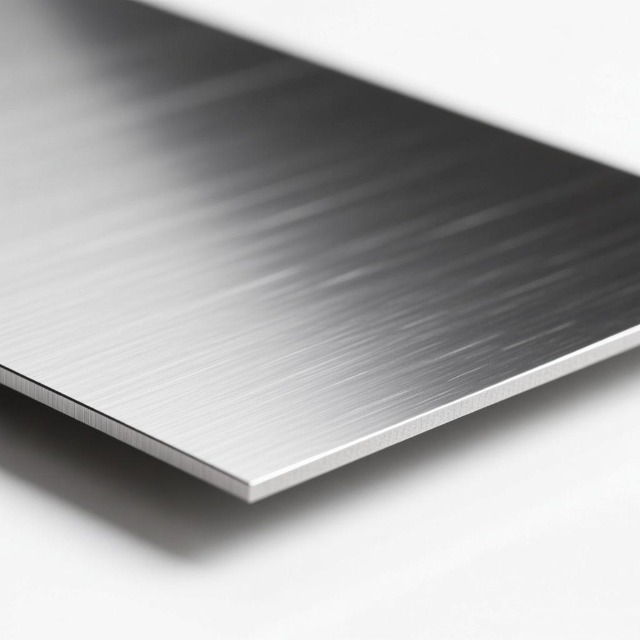
Theoretical weight assumes perfect dimensions. Real-world manufacturing involves mill tolerances. Specifications like ASTM B670 and AMS 5596 dictate the allowable thickness variations for an Inconel 718 Plate. These standards ensure structural integrity but complicate weight estimation for procurement teams.
Mills operate under an "over-tolerance" reality. They frequently roll material to the heavier side of the allowable tolerance band. This guarantees the material never falls below minimum thickness requirements during final inspection. A plate ordered at 0.500 inches nominal thickness might arrive at 0.530 inches actual thickness. This 6% increase in thickness translates directly to a 6% increase in actual weight. You pay for actual scale weight, not theoretical weight.
Cutting raw material generates waste. Kerf loss refers to the material destroyed by the cutting tool itself. Plasma cutting leaves a wide kerf, often removing up to 0.250 inches of material along the cut path. Waterjet and laser cutting offer tighter kerfs but still consume measurable material that you must account for in your raw material order.
| Cutting Method | Average Kerf Width (Inches) | Material Waste Impact |
|---|---|---|
| High-Definition Plasma | 0.150 - 0.250 | High waste, requires larger raw footprint |
| Abrasive Waterjet | 0.030 - 0.050 | Moderate waste, excellent edge quality |
| Fiber Laser | 0.010 - 0.020 | Low waste, highly efficient nesting |
Theoretical weight calculators do not allow for kerf. If you need a finished part measuring exactly 12x12 inches, you must start with a slightly larger footprint. You must manually factor in the extra material weight required for the cut paths. Additionally, add machining allowances. If the final part requires a precision milled surface, order the raw material slightly thicker and heavier to accommodate the final machining passes.
Surface finish directly impacts the final scale weight. Hot-rolled, annealed, and descaled finishes retain a slightly rough, uneven surface. This micro-texture holds additional mass compared to a perfectly smooth surface. The scale left behind from the hot-rolling process is a dense oxide layer. It adds marginal, yet measurable, weight to bulk orders.
Polished or precision-ground surfaces weigh less. The grinding process removes the outer layer of material to achieve strict flatness and finish requirements. If you order precision-ground material, the actual weight will align much closer to the theoretical volumetric calculation. Account for these finish variations when estimating freight for large industrial loads.
Heavy structural applications demand thick, robust materials. Plate forms typically exceed 0.1875 inches in thickness. Mills produce these heavy sections to withstand extreme mechanical stress and high-temperature environments found in power generation and aerospace sectors.
Primary use cases include turbine disks, high-pressure vessels, and cryogenic storage tanks. Engineers specify heavy sections based on weight-bearing load considerations. The structural success criteria depend on the material's ability to resist creep and fatigue under immense pressure. Accurate weight calculations for these massive components are critical for designing structural supports and selecting the correct overhead rigging equipment on the shop floor.
Aerospace designs prioritize weight reduction without sacrificing strength. Sheet forms range from 0.010 to 0.1875 inches in thickness. This thinner profile offers exceptional formability while maintaining high tensile strength at elevated temperatures.
Manufacturers use these sheets for exhaust systems, engine skins, and thrust reversers. The weight-to-strength ratio is the defining metric in aerospace applications. Every ounce matters. Engineers calculate sheet weight meticulously to ensure the final aircraft meets stringent fuel efficiency and payload requirements. Handling these thin sheets requires vacuum lifters to prevent kinking and surface damage during transit.
Precision manufacturing relies on continuous, thin-gauge materials. Strip forms typically measure less than 0.010 inches thick and arrive in large coils. This format supports high-speed, automated stamping and forming operations.
Common applications include high-temperature springs, aerospace fasteners, and instrumentation bellows. Buyers focus heavily on yield optimization and stamping efficiency. Calculating the exact weight per linear foot allows stampers to determine how many individual parts they can produce from a single coil. You must also match the total coil weight to the maximum load capacity of your uncoiler mandrel to prevent equipment failure.
Procurement errors often stem from confusing unit weights with lot weights. You must understand the critical difference between calculating per-piece weight and total lot weight (Q'ty/EA). A single component might weigh 50 pounds. An order of 200 components weighs 10,000 pounds, plus the weight of heavy-duty export packaging and custom pallets.
Purchase orders must align with supplier minimums and billing practices. Suppliers bill based on the actual scale weight of the total batch, not the theoretical weight of a single piece multiplied by the quantity. Always calculate the total batch weight, including expected mill over-tolerances, to secure accurate funding approvals before issuing the PO. Failing to do this results in invoice discrepancies and delayed shipments.
Freight costs scale directly with material weight. Accurate total-weight calculations prevent severe logistical headaches. If you underestimate the weight of a shipment, you risk LTL (Less-Than-Truckload) freight penalties. Carriers will re-weigh the load at their terminal and back-charge your account at a premium rate for crossing into a higher weight bracket.
Accurate weight data ensures safe handling at the receiving dock. Facility managers need to know the exact weight of incoming crates to deploy the correct forklifts and overhead cranes. A standard heavy-duty pallet holds roughly 4,000 pounds. If your order weighs 5,000 pounds, the supplier must split it across two pallets, which changes your freight footprint and receiving protocol.
Procurement teams must balance upfront costs against processing expenses. Ordering standard mill plates offers a lower cost-per-pound. However, this approach results in higher shipping weights and requires extensive internal processing to cut the material down to usable sizes. You pay freight on material you will eventually scrap.
Ordering exact-cut pieces carries a higher upfront cost per pound. The supplier absorbs the kerf loss, skeletal waste, and processing time. However, you benefit from a lower shipping weight and zero internal scrap generation. Analyze this trade-off carefully. For high-value superalloys, paying a premium for exact-cut, near-net shapes often yields better overall project profitability by eliminating secondary shop floor operations.
Never calculate budgets strictly on nominal dimensions. Nominal dimensions are theoretical targets used for basic engineering drawings. Actual dimensions reflect the physical reality of the rolled metal. Failing to factor in the maximum allowable mill tolerance guarantees a budget shortfall.
If your budget only covers the theoretical weight, the invoice for the actual scale weight will exceed your approved PO. Always calculate a maximum weight scenario using the upper limits of the ASTM thickness tolerances. This creates a financial buffer and prevents procurement delays when the final invoice arrives.
The condition of the material edge significantly alters the final weight and usable yield. A mill edge retains the natural, slightly rounded, and uneven profile created during the rolling process. It contains unusable material, often featuring micro-cracks, that you must trim away before production begins.
A slit edge or machined edge provides a precise, square profile. While slit-edge material costs more per pound, it offers 100% usable width. If you calculate your yield based on the full width of a mill-edge plate, you will run out of material before completing your production run. Adjust your weight and yield calculations based on the specific edge condition ordered.
Nesting multiple parts on a single sheet generates skeletal waste. This is the web of material left behind after the cutting head extracts the usable parts. Many buyers calculate the weight of the finished parts and assume that equals the required raw material weight.
This is a catastrophic financial risk. Highly efficient nesting software typically achieves 75% to 85% material utilization. The remaining 15% to 25% is skeletal waste. You must purchase the entire rectangular footprint required to nest the parts, including the skeletal waste and edge margins. Failing to calculate this scrap rate leads to severe under-ordering. You will have to place a secondary order for a small quantity of material, incurring high minimum lot charges and expedited freight fees.
Input your exact cut-to-size dimensions into the material calculator to establish a baseline theoretical weight for your next purchase order.
Download the ASTM B670 and AMS 5596 specification sheets to verify the maximum allowable thickness tolerances for your required plate size.
Audit your current nesting layouts to calculate the exact skeletal waste percentage and adjust your raw material volume requirements accordingly.
Contact the engineering sales team with your final batch quantities (Q'ty/EA) to receive a formal quote based on actual scale weight.
A: The exact density is 0.296 lbs/in³ or 8.19 g/cm³. This specific value is dictated by its unique blend of Nickel, Chromium, Iron, Niobium, and Molybdenum. You must use this exact figure rather than generic stainless steel or base nickel densities to ensure accurate procurement and freight calculations.
A: A 1-inch thick plate weighs exactly 42.624 pounds per square foot. The calculation is: 12 inches (length) × 12 inches (width) × 1 inch (thickness) × 0.296 lbs/in³ (density) = 42.624 lbs. Always factor in mill tolerances, which may increase actual scale weight.
A: To find the linear weight of a coiled strip, multiply the width in inches by the thickness in inches, then multiply by 12 to represent one foot of length. Finally, multiply that volume by the density of 0.296. This yields the exact pounds per linear foot.
A: Calculators provide theoretical weight based on nominal dimensions. Mills typically roll material to the heavier side of allowable ASTM or AMS tolerances to ensure minimum thickness requirements are met. You are billed for the actual scale weight, which includes this extra thickness.
A: No. Standard volumetric calculators do not account for kerf loss, which is the material destroyed by the cutting tool. They also ignore skeletal waste generated during nesting. You must manually add extra material weight to your order to accommodate cut paths and final machining allowances.
A: Hot-rolled and descaled finishes retain a micro-texture and scale that add marginal weight to the plate. Precision-ground or polished surfaces weigh slightly less because the grinding process removes the outer layer of material to achieve strict flatness and finish tolerances.


