- All
- Product Name
- Product Keyword
- Product Model
- Product Summary
- Product Description
- Multi Field Search
English


Views: 0 Author: Site Editor Publish Time: 2026-09-30 Origin: Site


Material failure in high-stress, high-temperature, or corrosive environments leads to catastrophic downtime and safety hazards, making tube material selection a high-stakes engineering decision. Engineers and procurement teams must balance the significantly higher upfront material investment of superalloys against the performance limitations and lifecycle risks of standard stainless steel. Moving beyond basic specification sheets establishes a rigorous evaluation framework based on thermal thresholds, corrosive media exposure, and mechanical stress to determine exactly when an upgrade is necessary. You cannot afford unexpected ruptures in chemical processing lines or power generation boilers. Standard alloys work well for baseline fluid transport, but pushing them past their metallurgical limits guarantees premature failure. We evaluate the exact failure points of standard alloys to deploy high-performance metals only where absolutely required. Analyzing peak temperatures, chemical concentrations, and mechanical loads eliminates guesswork, allowing you to build a fluid transport system designed for long-term reliability.
Thermal and Corrosive Thresholds: Standard stainless steel degrades rapidly above 800°C (1472°F) or in high-chloride environments, whereas specific superalloys maintain structural integrity and resist oxidation at extreme temperatures.
Mechanical Trade-offs: The rapid work-hardening rate of nickel-chromium alloys complicates machining and forging compared to stainless steel, requiring specialized fabrication expertise and intermediate annealing.
Lifecycle Cost vs. Upfront Price: While initial procurement costs are substantially higher, deploying the correct alloy in aggressive environments drastically reduces long-term maintenance, replacement frequency, and facility downtime.
Grade Specificity Matters: Selecting between options like Inconel 600, Inconel 625, and various stainless steel grades (e.g., 304, 316, Duplex) requires matching the exact alloy chemistry to the specific operational failure risks.
Standard stainless steel relies on an iron-based composition. Mills add a minimum of 10.5% chromium to create a basic passive oxide layer. Common grades like 304 and 316 incorporate moderate amounts of nickel to stabilize the austenitic structure and improve general corrosion resistance. Superalloys take a fundamentally different approach. They utilize a dense nickel-chromium matrix where iron acts merely as a secondary element or trace addition. This foundational shift in the atomic lattice alters how the metal handles extreme heat, mechanical stress, and aggressive chemical attacks. The face-centered cubic crystal structure of these high-nickel alloys remains stable across massive temperature fluctuations, preventing the phase changes that weaken standard steel.
Engineers evaluate materials across a broad performance spectrum. Carbon steel handles basic, non-corrosive fluid transport. Stainless steel manages moderate demands and general moisture exposure. When weight-sensitive corrosion resistance is required, titanium enters the conversation. However, you bypass these standard options and select nickel alloy tubing when extreme heat and heavy mechanical stress combine in the same environment. Understanding where each metal sits on this spectrum prevents over-engineering simple systems and under-engineering critical infrastructure. You match the material to the exact environmental hazard, ensuring the piping system survives its intended design life without premature degradation.
You must establish strict baseline parameters before selecting a tubing material. Define the absolute maximum operating temperature, including potential thermal spikes during process upsets. Calculate the exact internal pressure ratings required under peak loads using ASME B31.3 process piping codes. Determine the expected lifespan of the piping system and outline acceptable maintenance intervals. These success criteria dictate whether a standard iron-based alloy will survive or if the operational environment demands the superior stability of a superalloy. Wall thickness calculations change drastically depending on the high-temperature allowable stress values of the chosen material.
Nickel and chromium perform highly specific functions within the alloy matrix. High nickel content prevents chloride stress corrosion cracking, a common failure mode that destroys standard stainless steel in marine and chemical environments. Nickel stabilizes the metallurgical structure, preventing it from becoming brittle under stress. Chromium provides exceptional oxidation resistance. It reacts with oxygen to form a microscopic, self-repairing shield. Together, these elements form an impenetrable barrier against aggressive media and extreme thermal degradation. When the surface is scratched, the chromium instantly reacts with ambient oxygen to reform the protective layer, stopping corrosion before it penetrates the tube wall.
Standard 300-series stainless steel degrades rapidly at elevated temperatures. Above 800°C (1472°F), stainless steel becomes highly susceptible to scaling. The protective oxide layer breaks down, flakes off, and exposes fresh metal to continuous oxidation. High heat triggers carbide precipitation at the grain boundaries, severely weakening the structural integrity of the steel. Superalloys resist this degradation. They maintain a stable, tightly adhering oxide scale well beyond 1000°C. This scale does not spall off during thermal cycling, ensuring continuous protection in furnaces, exhaust headers, and high-temperature reactors. The metal retains its smooth internal bore, preventing flow restrictions caused by heavy scaling.
Creep is the slow, permanent deformation of a metal subjected to constant mechanical stress at high temperatures. It represents a primary failure point for standard alloys. Standard stainless steel stretches, thins out, and eventually ruptures under these conditions. Specifying inconel tubing maintains exceptional tensile strength and resists this deformation. The dense nickel matrix locks the internal grain structure in place. This prevents catastrophic creep failure, making it the standard choice for high-pressure boiler tubes and aerospace turbine components. Engineers use the Larson-Miller parameter to calculate exactly how long the tube will survive under specific stress and temperature combinations.
Industrial piping systems undergo constant thermal expansion and contraction. Different metals expand at drastically different rates when heated. The coefficient of thermal expansion (CTE) dictates how much a tube will grow. Stainless steel expands significantly, which places immense stress on rigid welds, flanges, and support brackets during rapid heating and cooling cycles. Nickel alloys generally exhibit a lower and more predictable CTE. They remain dimensionally stable, which drastically reduces thermal fatigue in complex, rigid piping networks. You require fewer expansion loops and heavy-duty pipe supports when the material itself resists massive dimensional changes.
Localized corrosion destroys fluid transport systems from the inside out. Pitting and crevice corrosion represent the primary threats in chemical processing. Engineers use the Pitting Resistance Equivalent Number (PREN) to evaluate and compare different alloys. Standard 316 stainless steel has a PREN of approximately 25, which is sufficient for basic applications. Superalloys push this number significantly higher. The addition of elements like molybdenum and niobium stops localized attack entirely, preventing microscopic pits from boring through the tube wall. A higher PREN directly correlates to longer survival times in stagnant fluid zones where crevice corrosion typically initiates.
| Alloy Grade | Typical PREN Value | Pitting Resistance Level | Recommended Environment |
|---|---|---|---|
| 304 Stainless Steel | 18 - 20 | Low | Fresh water, mild atmospheric |
| 316 Stainless Steel | 23 - 28 | Moderate | Potable water, mild chemicals |
| Duplex 2205 | 34 - 38 | High | Brackish water, moderate chlorides |
| Inconel 625 | 45 - 50 | Extreme | Seawater, severe acidic media |
Aggressive media quickly compromise standard iron-based alloys. Marine environments, petrochemical plants, and nuclear facilities expose tubing to harsh chlorides and concentrated acids. Stainless steel suffers from rapid pitting and stress cracking in wet chloride environments. Nickel alloys thrive under these exact conditions. They easily handle exposure to sulfuric acid, hydrochloric acid, and sour gas containing high levels of hydrogen sulfide. If the internal surface is scratched or mechanically damaged, the high-chromium passive layer regenerates almost instantly, preventing further chemical attack. We deploy these materials in offshore topsides where salt spray and internal corrosive fluids attack the piping simultaneously.
Integrating different metals within the same fluid transfer system introduces severe galvanic corrosion risks. When two dissimilar metals connect in the presence of an electrolyte, the less noble metal acts as an anode and corrodes rapidly. You must carefully manage these connections. Using dielectric unions, compatible flanges, or specific isolation gaskets prevents this electrochemical reaction. Matching the galvanic potential of the tubing to the surrounding valves and pumps prevents accelerated degradation across the entire system. We map out the anodic index of every component in the piping run to ensure no unintended galvanic cells form during operation.
Yield strength and tensile strength define the structural load-bearing capabilities of the tubing. At room temperature, high-strength stainless steels perform exceptionally well. Duplex stainless steel offers excellent yield strength for heavy structural applications. Elevated temperatures completely change this dynamic. Stainless steel loses its mechanical strength rapidly as heat rises. Superalloys retain their structural properties. They continue to carry heavy mechanical loads and resist internal pressures even when operating at red-hot temperatures. We apply specific derating factors to stainless steel at high temperatures, often forcing us to use impractically thick tube walls. High-nickel alloys allow for thinner, lighter tube walls under the same thermal conditions.
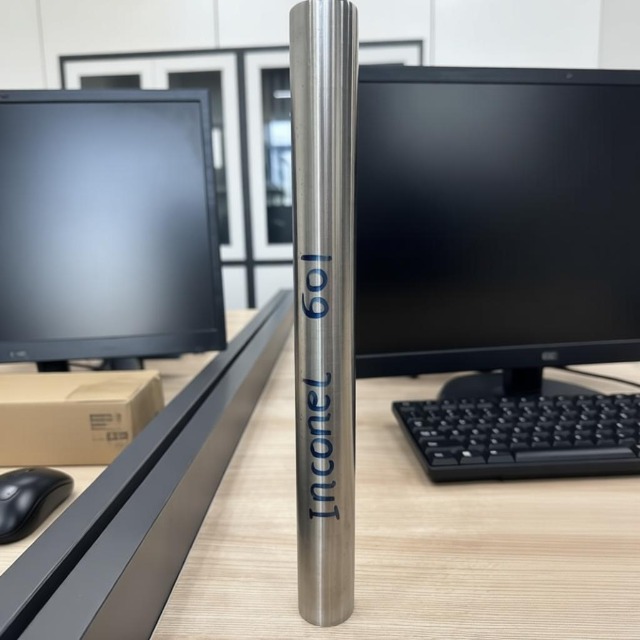
The superior mechanical properties of superalloys create significant manufacturing challenges. Nickel-chromium alloys work-harden rapidly during cold working. Specifying inconel 600 tubing means dealing with a material that hardens much faster than standard stainless steel. During each forging or bending pass, the material quickly becomes harder and stronger. This rapid hardening necessitates frequent intermediate annealing. You must heat the tube to relieve internal stresses before continuing the forming process. Skipping this step causes micro-fractures, as the metal becomes too brittle to bend. Fabricators must plan their bending radii and forming sequences carefully to account for this rapid grain structure lock-up.
Machinability suffers due to this rapid work-hardening characteristic. Fabrication shops require specialized, rigid tooling. Carbide inserts are mandatory to cut through the dense matrix. Machining speeds must remain slow, and feed rates must be continuous to prevent the surface from hardening under the cutting tool. Welding requires equal precision. Welders must use specific matching filler metals and manage heat input carefully. Proper shielding gases, such as pure argon, prevent weld decay, porosity, and hot cracking in the heat-affected zone.
Clean the weld joint thoroughly using a dedicated stainless steel wire brush to remove all oxides and hydrocarbons.
Set up the GTAW (TIG) welding machine with a pure argon shielding gas purge to protect the root pass.
Use ERNiCrMo-3 or an exactly matched filler wire to bridge the joint.
Maintain strict interpass temperature controls, keeping the heat input low to prevent hot cracking.
Perform a post-weld visual inspection followed by dye penetrant testing to verify surface integrity.
You must match the specific alloy grade to the precise operational hazard. Compare standard 300-series stainless steel against high-nickel alternatives. Grade 600 is engineered specifically to resist high-purity water and caustic alkalis. Its high nickel content completely prevents chloride-ion stress-corrosion cracking. Standard 304 or 316 stainless steel will crack and fail under these exact environmental conditions. We mandate Grade 600 for specific chemical processing lines, caustic soda production, and pressurized water reactor components where stress cracking leads to immediate facility shutdowns.
Evaluating inconel 625 tubing against high-performance options like Duplex or Super Duplex stainless steel requires a nuanced approach. Duplex stainless offers an excellent strength ratio for moderately aggressive environments and handles basic chloride exposure effectively. Grade 625 leans heavily toward extreme corrosion resistance. It offers unmatched fatigue strength and handles highly oxygenated, severe wet corrosion environments. You specify Grade 625 for seawater cooling loops, offshore flare booms, and aerospace exhaust systems where operational failure is simply not an option.
Understanding the internal hierarchy of superalloys is critical when upgrading from stainless steel. Buyers often confuse the specific applications of different high-nickel grades. Grade 625 is solid-solution strengthened and optimized for severe wet corrosion and extreme oxidation resistance. Grade 718 is precipitation-hardened. This specific heat treatment maximizes its yield strength for high-stress, heavy-load applications. Engineers specify 718 for downhole oil and gas safety valves, wellhead components, and high-speed turbine shafts where mechanical strength is the primary concern, while relying on 625 for fluid transport tubing.
Secondary material characteristics often influence system design. Superalloys possess distinct electrical and magnetic properties compared to standard steel. They generally exhibit lower electrical conductivity than the moderate conductivity found in stainless steel. Their magnetic permeability differs significantly. Most nickel-chromium superalloys remain entirely non-magnetic across a wide temperature range. This non-magnetic characteristic proves vital in specialized electronic enclosures, MRI equipment, and sensitive instrumentation lines where magnetic interference disrupts accurate readings. We utilize these alloys in directional drilling tools where magnetic interference throws off navigation sensors.
Implementation requires careful project management and supply chain planning. Standard stainless steel sits on warehouse shelves globally, ready for immediate dispatch. Specialized superalloys do not share this availability. Sourcing high-nickel tubing involves significantly longer lead times. Manufacturers often require custom mill runs and enforce strict minimum order quantities. Project managers must account for these supply chain realities early in the planning phase to prevent severe construction delays. We factor in extended delivery windows for custom wall thicknesses and non-standard outer diameters.
Quality assurance prevents catastrophic system failures. You must verify the metallurgical composition of every single tube before installation. Strict Positive Material Identification (PMI) using X-ray fluorescence guns is mandatory on the job site. You must demand and review certified mill test reports (MTRs) to confirm the exact chemical composition matches your specifications. Non-destructive testing (NDT), including ultrasonic and radiographic inspection, ensures internal structural integrity. Counterfeit or out-of-spec materials cannot enter critical high-pressure applications.
Request EN 10204 3.1 certified Mill Test Reports before the material ships from the facility.
Conduct 100% Positive Material Identification (PMI) on all incoming tubing batches at the receiving dock.
Perform ultrasonic testing (UT) to verify uniform wall thickness and detect hidden internal laminations.
Execute hydrostatic testing on fabricated spool pieces to confirm pressure boundary integrity.
Log all heat numbers and map them to the final isometric drawings for full lifecycle traceability.
Securing a reliable supply chain requires rigorous vendor vetting. You must select metallurgical suppliers with proven track records in high-performance alloys. They must possess the capability to provide accurate technical support and engineering guidance. Verified material provenance is an absolute requirement. An unreliable supplier introduces unacceptable risk into high-stakes engineering projects. Audit your suppliers to ensure they adhere to strict international metallurgical standards, maintain robust internal quality control processes, and hold relevant ISO certifications.
Consult with a staff metallurgist to review your specific operational parameters and identify potential failure points in your current system.
Request physical material samples from your supplier to conduct real-world environmental testing in your facility.
Submit exact thermal, pressure, and chemical exposure specifications to your engineering team for rigorous validation.
Audit your existing standard piping systems immediately for early signs of pitting or stress corrosion cracking.
A: Yes, particularly at elevated temperatures. While some stainless steels feature high room-temperature yield strength, they lose structural integrity under extreme heat. Nickel-chromium superalloys maintain exceptional tensile strength and resist creep rupture even when exposed to continuous high-temperature mechanical stress.
A: Yes, dissimilar metal welding is a common industrial practice. You must use specific filler metals, such as ERNiCrMo-3, to bridge the metallurgical gap. Welders must carefully manage heat input to prevent hot cracking and address the differing coefficients of thermal expansion.
A: The high nickel and chromium content creates a dense, tough matrix that work-hardens rapidly during machining and extrusion. Manufacturers must use specialized carbide tooling, slower cutting speeds, and frequent intermediate annealing processes to prevent micro-fractures during fabrication.
A: This specific alloy maintains high structural integrity and exceptional oxidation resistance up to 982°C (1800°F). In certain low-stress applications, it withstands brief exposures to even higher temperatures without suffering from severe scaling or catastrophic metallurgical degradation.
A: While highly resistant, no metal is entirely immune to degradation. It will not rust like standard carbon steel, but it degrades under highly specific conditions. Prolonged exposure to certain hot, concentrated acids or extreme hydrofluoric acid environments eventually breaks down its protective passive layer.
A: Rapid work-hardening makes cold bending and forming extremely difficult. Installation teams must use heavy-duty, specialized bending equipment. For tight radii or complex routing, the tubing requires strict intermediate annealing to relieve internal stresses and prevent the metal from cracking.


