- All
- Product Name
- Product Keyword
- Product Model
- Product Summary
- Product Description
- Multi Field Search
English


Views: 0 Author: Site Editor Publish Time: 2026-08-10 Origin: Site


Material selection at the extreme edge of engineering is rarely just about structural integrity. It represents a strict balancing act. You must weigh initial procurement budgets against the catastrophic risk of component failure. Every industrial project carries unique environmental stressors. Stainless steel serves as the reliable industry standard. It provides excellent general corrosion resistance. It protects everyday structures effectively. However, scaling up to high-temperature or hyper-corrosive environments changes the equation completely.
These severe conditions force engineering teams to evaluate more robust alternatives. You cannot rely on basic grades when dealing with extreme heat. This guide breaks down the precise performance thresholds of these metals. We explore the operational realities of choosing between standard stainless steel and high-performance alternatives. You will learn how to evaluate heat thresholds and mechanical properties. We will help you match specific metallurgical traits to your most demanding project parameters.
Composition Baseline: Stainless steel is an iron-based alloy requiring at least 10.5% chromium; nickel alloy relies on nickel as its primary base, fundamentally altering its thermal and chemical stability.
Heat Thresholds: Stainless steels typically lose structural integrity and scale heavily above 1,500°F (815°C), whereas specialized nickel alloys maintain yield strength in environments exceeding 1,800°F (982°C).
Implementation Risk: Nickel alloys offer superior lifecycle longevity in harsh environments but require specialized tooling, slower machining speeds, and higher upfront capital.
The Decision Rule: Default to austenitic stainless steel for ambient-temperature moisture and mild chemical exposure; mandate nickel alloys for sour gas, aerospace turbines, or high-chloride pitting environments.
Procurement teams face immense pressure to control upfront budgets. They often default to standard 304 or 316 stainless steel. This choice works well for standard applications. However, severe operational environments quickly expose the limits of commodity metals. Teams soon face premature material degradation. Component failures lead to costly facility downtime.
You must frame material selection as a long-term reliability decision. A successful material specification aligns two critical factors. First, evaluate the critical pitting temperature (CPT). Second, measure the required yield strength against the exact environmental lifecycle. You want to avoid over-engineering simple parts. You also must prevent dangerous under-specification in critical zones. Balancing these factors ensures operational safety.
We divide industrial metals into two distinct solution categories. Each serves a very specific engineering purpose.
Commodity Stainless Steel: These grades dominate structural applications. They work perfectly for food processing facilities. You also see them in standard architectural use. They handle ambient moisture and mild chemicals well.
High-Performance Nickel: These materials handle mission-critical applications. Failure here results in safety hazards. It also causes massive revenue loss. We reserve these for chemical processing plants and deep-water energy extraction.
Common Mistake: Engineers sometimes assume upgrading from 304 to 316 stainless solves all corrosion problems. Grade 316 adds molybdenum for better chloride resistance. It still fails in severe, high-temperature acidic environments.
You cannot understand performance without examining the atomic baseline. The base elements dictate how a metal behaves under stress. They determine how the matrix holds together during thermal cycling. We look at the periodic table to understand these metallurgical behaviors.
Stainless steel utilizes iron (Fe) as its primary base element. It requires at least 10.5% chromium to form a protective oxide layer. This iron base makes it relatively affordable. However, iron naturally loses strength at very high temperatures. It undergoes phase changes that alter its mechanical properties.
A true nickel alloy relies on nickel (Ni) as its primary base. This fundamentally alters the metal. The nickel matrix provides incredible atomic stability. It resists phase changes that typically weaken iron-based metals. It absorbs alloying elements efficiently.
Many people misunderstand austenitic stainless steels like 304 and 316. These grades do contain nickel. They typically hold between 8% and 14% nickel. The nickel stabilizes their face-centered cubic (FCC) microstructure. This makes them ductile and non-magnetic. However, because iron remains the majority element, they are not classified as true high-nickel materials.
Metallurgists add specific elements to enhance performance. Molybdenum, niobium, and chromium react differently depending on the base matrix. The matrix limits how much of an element you can add.
Chromium: It provides primary oxidation resistance. In an iron matrix, it creates a basic passive layer. In a nickel matrix, it pushes oxidation limits even higher.
Molybdenum: This element fights pitting and crevice corrosion. It works efficiently in both matrices. However, a nickel base allows for much higher molybdenum concentrations without causing severe brittleness.
Niobium: It prevents grain boundary tearing. It stabilizes the metal during intensive welding. This prevents weld decay in severe chemical environments.
Best Practice: Always request exact chemical composition reports. Minor variations in alloy additions drastically alter chemical resistance capabilities.
Material Composition Summary
| Property / Element | Standard Stainless Steel (e.g., 316) | High-Performance Nickel (e.g., Alloy 625) |
|---|---|---|
| Base Element | Iron (Fe) - Typically 60-70% | Nickel (Ni) - Typically 50-70% |
| Chromium Content | 16-18% | 20-23% |
| Molybdenum Content | 2-3% | 8-10% |
| Primary Strength Focus | General structural integrity | High heat and extreme corrosion |
Engineers evaluate materials across three primary dimensions. You must analyze thermal stability, chemical resistance, and mechanical strength. These factors dictate the operational boundaries of your equipment. Ignoring one dimension often leads to catastrophic system failure.
Metals expand when exposed to heat. Continuous thermal cycling strains the atomic structure. We evaluate this through creep resistance. Creep is the slow deformation of metal under mechanical stress at high temperatures. High creep rates destroy mechanical tolerances.
Standard stainless steels perform poorly under extreme heat. They typically lose structural integrity above 1,500°F (815°C). The iron matrix scales heavily. The metal becomes brittle and fractures easily under load.
Nickel maintains exceptional atomic stability. It resists grain boundary sliding during continuous thermal cycling. Specialized grades easily maintain yield strength in environments exceeding 1,800°F (982°C). They refuse to deform under sustained high-temperature stress. They hold their precise shape.
You must map material features directly to operational outcomes. We look closely at chloride-rich environments like seawater. We also evaluate acidic applications involving sulfuric or hydrochloric acids. These chemicals strip away weak passive layers.
Stainless steel struggles in concentrated chlorides. It suffers from localized pitting. More importantly, it falls victim to stress-corrosion cracking (SCC). SCC is a recognized, catastrophic vulnerability for standard austenitic grades. Tensile stress and a corrosive environment cause sudden, brittle failure.
High-nickel bases effectively neutralize stress-corrosion cracking. They withstand aggressive acidic attacks effortlessly. The high nickel content repels chloride ions. This prevents the initial micro-pits from forming on the metal surface.
Tensile and yield strength dictate load-bearing capacities. Martensitic stainless steels can achieve exceptional hardness. You can heat-treat them for rigid structural parts. However, this hardness disappears quickly as temperatures rise.
Nickel variants retain their strength across a much wider temperature delta. They perform reliably in cryogenic environments. They also maintain their mechanical integrity inside jet engine turbines. This wide operational window makes them invaluable for extreme engineering projects.
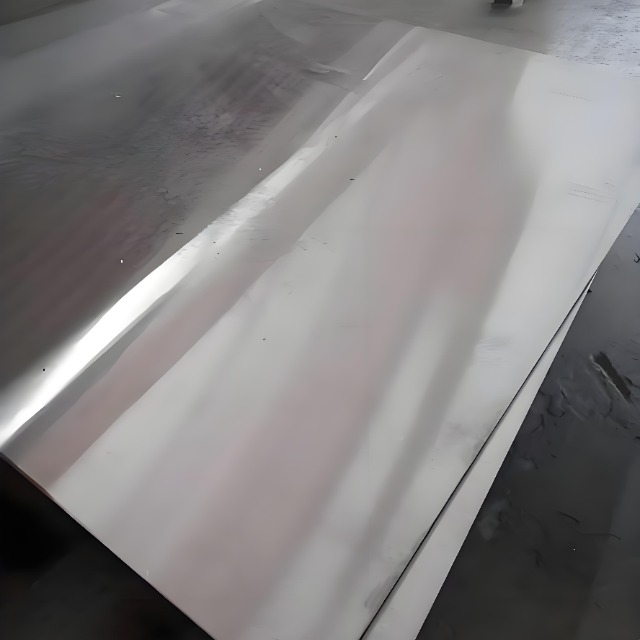
Sometimes, standard chemical resistance is not enough. You face compound threats combining high pressure, extreme heat, and corrosive gases. When standard options fail, superalloys enter the shortlisting process. We specify an Inconel Alloy for extreme-stress compliance.
These superalloys utilize complex precipitation-hardening mechanisms. They trap intermetallic compounds within the matrix. This internal blocking stops dislocation movements. The metal achieves unmatched strength at elevated temperatures.
Engineers frequently specify Inconel 718 Bar for highly dynamic environments. We see it used heavily in aerospace engine components. It also dominates downhole oil and gas tooling applications.
This grade delivers specific operational outcomes. It provides exceptional high-yield tensile strength. It boasts incredible creep-rupture properties up to 1300°F (700°C). Metallurgists achieve this through precise age-hardening. The metal undergoes a multi-step thermal treatment to lock its atomic structure firmly in place.
Heavy industrial fabrication requires different properties. Here, we often turn to Inconel 625 Plate. We use this material for marine exhaust systems. It also forms the thick shells of chemical processing reactor vessels.
This specific grade provides outstanding weldability. Fabricators can join thick sections without fear of cracking. It delivers immense localized corrosion resistance. Crucially, it does this without requiring post-weld heat treatments. This saves fabrication time and reduces complex manufacturing steps on the factory floor.
Common Mistake: Do not substitute one superalloy for another without reviewing the thermal environment. Grade 718 thrives on precipitation hardening. Grade 625 relies on solid-solution strengthening. They behave very differently under intense welding stress.
Specifying a superalloy solves your environmental challenges. However, it introduces significant fabrication hurdles. You must prepare your manufacturing team for these implementation risks. Machining these metals requires distinct strategies and immense patience.
High-nickel metals present a notorious manufacturing risk. They undergo rapid work-hardening during machining. As the cutting tool strikes the metal, the surface instantly hardens. The next pass of the tool hits a much harder surface.
This rapid work-hardening leads to accelerated tool wear. It causes sudden insert breakages. Consequently, it drastically increases overall manufacturing time. Standard stainless steel, especially free-machining grades like 303 or standard 304, machines significantly faster. They require far less effort and consume fewer cutting tools per job.
You can successfully machine these superalloys. You just need to follow strict operational protocols. Machine shops must adapt their standard operating procedures completely.
Follow these mitigation steps to ensure machining success:
Implement Rigid Tooling: Eliminate all vibration in the lathe or mill. Any chatter will instantly work-harden the material surface. You must secure the workpiece flawlessly.
Maintain Positive Feeds: The tool must constantly cut beneath the work-hardened layer. Do not let the tool dwell or rub against the spinning metal. Keep the cutting action decisive.
Use Specialized Coolants: High-pressure coolant delivery is mandatory. It clears chips rapidly. It also manages the intense heat generated at the cutting edge.
Select Premium Carbides: Utilize advanced cutting inserts. PVD-coated carbide tools handle the high shear forces much better than standard high-speed steel tooling.
Best Practice: Always program your tool paths to enter and exit the cut cleanly. Hesitation at the metal surface guarantees a ruined cutting edge and a scrapped part.
You now understand the metallurgical boundaries. You know the fabrication risks. How do you make the final procurement decision? You need a structured framework to shortlist the right material correctly.
We rely on empirical environmental data. We never guess based on past project habits. Use this framework to guide your specification process step by step.
You should default to standard austenitic grades under specific conditions. They offer excellent value when applied correctly.
Choose them for budget-constrained projects with predictable environments.
Specify them when operating temperatures remain safely below 1,000°F (537°C).
Use them in environments with mild to moderate atmospheric exposure.
Apply them where standard chemical cleaning protocols exist.
You must mandate high-performance metals when the risk of failure outweighs initial material budgets. Certain industries leave no room for error.
Mandate them in compliance-heavy environments. They ensure adherence to strict standards like NACE MR0175 for sour gas service.
Specify them for applications demanding absolute zero-fail reliability.
Require them in high-temperature, high-pressure, or highly caustic scenarios.
Use them where stress-corrosion cracking poses an immediate safety threat to personnel.
Do not finalize your bulk procurement yet. You need to validate your assumptions. Consult with a qualified metallurgist. Review your precise environmental parameters together. Discuss maximum operating temperatures in detail. Detail the exact chemical composition of your process fluids. Clarify all pressure variables.
Finally, always request material test reports (MTRs). MTRs prove the exact chemical makeup of the batch you are buying. They validate that the material meets your specified engineering standards exactly.
The choice between standard stainless steel and a high-performance superalloy is rarely subjective. It is dictated entirely by the thermal, chemical, and mechanical boundaries of your application environment. Standard alloys work perfectly for ambient environments. Superalloys take over when extreme heat and corrosive pressures emerge.
Do not sacrifice long-term infrastructure reliability for short-term material savings. Premature component failure causes extensive damage. Let empirical environmental data drive your final engineering decision confidently.
Take proactive steps today to secure your infrastructure. Contact our engineering team for a dedicated material consultation. Review your environmental parameters with our experts. Request a detailed quote for specific performance grades, including custom-cut Inconel 718 Bar or Inconel 625 Plate.
A: It depends entirely on the operating temperature. At room temperature, certain heat-treated martensitic stainless steels can match or even exceed the yield strength of superalloys. However, at extreme temperatures above 1,000°F, high-nickel metals are significantly stronger. They resist thermal deformation and maintain their load-bearing capacity far better than any stainless grade.
A: Yes, many standard stainless steels contain nickel. Austenitic grades like 304 and 316 contain roughly 8% to 14% nickel. This addition improves their formability and boosts overall corrosion resistance. However, because their primary base element remains iron, metallurgists do not classify them as true high-nickel materials.
A: The raw commodity price of pure nickel is inherently much higher than iron. Additionally, the manufacturing processes are highly complex. Melting, forging, and machining these superalloys safely without contamination requires advanced equipment. These intense refinement and fabrication demands naturally drive up the initial procurement costs.


