- All
- Product Name
- Product Keyword
- Product Model
- Product Summary
- Product Description
- Multi Field Search
English


Views: 0 Author: Site Editor Publish Time: 2026-09-07 Origin: Site


Transitioning from engineering design to material procurement requires precise dimensional and compliance data. Precision matters immensely during the procurement phase. Engineering drawings alone cannot guarantee a successful build. You must translate technical specifications into actionable sourcing parameters. Specifying the wrong thickness, tolerance, or certification standard for an inconel 625 plate can lead to critical fabrication delays. Such dimensional errors frequently cause failed quality audits upon delivery.
Furthermore, incorrect specifications risk catastrophic performance failures in high-stress environments. Material degradation in chemical reactors or aerospace exhausts endangers lives and destroys budgets. You need exact specs to prevent expensive material waste. We created this guide to bridge the gap between design requirements and real-world availability.
Our goal is to provide procurement managers and engineers a strictly factual, spec-driven framework. You can use this guide for selecting, sizing, and sourcing Alloy 625 plates. We detail size limits, industry standard compliance, and specialized cutting methods below. This framework perfectly supports your immediate project needs.
Sizing Distinctions: The technical threshold between Inconel 625 Sheet and Plate is typically dictated by thickness (sheet is generally under 0.1875" / 4.8mm; plate is 0.1875" and thicker).
Compliance Baselines: Verified plates must conform to ASTM B443 and UNS N06625 standards, backed by fully traceable Material Test Reports (MTRs).
Procurement Reality: Lead times and costs for this Nickel Alloy Plate are heavily influenced by raw material market volatility and custom cut-to-size processing requirements.
Fabrication Constraints: The material's high strain-hardening rate requires specific tooling and cutting methodologies (e.g., abrasive waterjet or high-definition plasma) tailored to the plate's thickness.
Industry standards establish strict boundaries between sheet and plate products. You must specify the right category to ensure correct rolling mill processing. The standard thickness threshold separating an Inconel 625 Sheet from a plate is 0.1875 inches (3/16"). Materials measuring under 0.1875 inches generally fall into the sheet category. Sheets undergo cold rolling for tighter tolerances and smoother finishes.
Conversely, materials measuring 0.1875 inches and up to 4 inches classify as plates. Hot rolling typically produces these heavier gauges. The metallurgical grain structure differs slightly between the two processes. We rely on this distinct threshold for accurate mill ordering, tolerance calculations, and weight estimations.
Procurement teams can source standard plates in various fractional and decimal thicknesses. Common sizes begin at 3/16" and scale upward based on structural demand. You will frequently find 1/4", 3/8", 1/2", and 1" plates readily available in stock. Heavy industries rely on these standard increments for predictable load bearing.
Suppliers also stock heavy plates exceeding 2 inches for highly demanding applications. Thick plates form the foundation of massive pressure vessels and heat exchangers. You should always verify local service center inventory for non-standard thicknesses. Custom rolling takes significantly longer and requires higher minimum order quantities.
Table: Standard Fractional and Decimal Thicknesses
| Fractional Size (Inches) | Decimal Size (Inches) | Metric Equivalent (mm) | Common Application Focus |
|---|---|---|---|
| 3/16" | 0.1875 | 4.76 | Light structural enclosures |
| 1/4" | 0.250 | 6.35 | Marine exhaust components |
| 1/2" | 0.500 | 12.70 | Chemical storage tank walls |
| 1" | 1.000 | 25.40 | Heavy flange manufacturing |
| 2"+ | 2.000+ | 50.80+ | High-pressure vessel bases |
Mill-produced dimensions dictate your maximum continuous component size. Standardizing your cut patterns against these mill dimensions reduces scrap. Service centers typically stock common formats like 36" x 96" and 48" x 120". These sizes fit easily on standard flatbed transport trucks. They also load efficiently onto standard CNC plasma tables.
Larger format plates measuring 96" x 240" support massive industrial construction. Wide plates reduce the total number of necessary weld seams. Fewer weld seams directly improve the structural integrity of large containment vessels. Utilizing standard sizes lowers your overall raw material expenditure effectively.
Mills permit slight variations in thickness, width, and flatness during heavy processing. Standard mill tolerances follow strict ASTM B906 guidelines for flat-rolled products. Hot-rolled plates naturally exhibit minor surface irregularities and camber.
Implementation Risk: Out-of-tolerance plates cause severe disruptions during advanced fabrication. They can easily misalign automated robotic welding seams. Deviations also complicate rigid CNC machining setups by altering baseline zero points. You must explicitly request restricted tolerances or post-process leveling for precision aerospace components. Do not assume standard mill flatness will meet strict aerospace criteria.
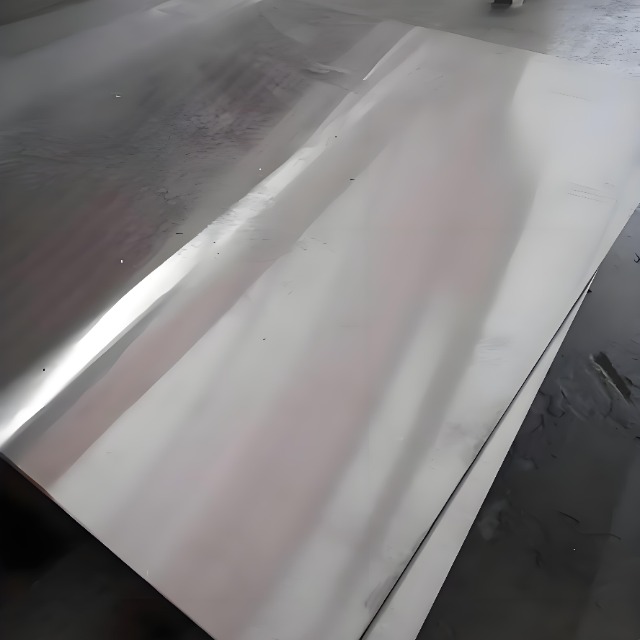
ASTM B443 serves as the foundational specification for this high-performance material. It dictates the exact chemical composition boundaries required for certification. The standard strictly regulates Nickel (58% minimum), Chromium (20-23%), and Molybdenum (8-10%) levels. It also mandates a precise addition of Columbium (Niobium) combined with Tantalum.
This specific multi-element chemistry provides the alloy's signature strength. The Columbium addition interacts with Molybdenum to stiffen the alloy matrix. This solid-solution hardening eliminates the need for precipitation hardening treatments. The specification thoroughly defines these baseline mechanical properties to ensure global uniformity.
The standard separates materials into two distinct grade conditions based on heat treatment. Grade 1 indicates an annealed condition. You should specify Grade 1 for operating temperatures below 1000°F (538°C). This temper offers optimal fatigue strength and excellent ambient formability.
Grade 2 denotes a specialized solution-annealed condition. We specify Grade 2 for high-stress applications exceeding 1000°F. The higher-temperature solution annealing process dissolves carbides back into the matrix. This microstructural shift significantly enhances creep and rupture strength at elevated temperatures. Matching the correct grade to your operating environment prevents premature mechanical failure.
Procurement must rigorously validate Material Test Reports (MTRs) upon delivery. You cannot accept uncertified materials lacking complete metallurgical documentation. Counterfeit or non-compliant alloys pose severe safety risks in pressurized environments.
Trust/Verification criteria: You must verify heat lot traceability across every document page first. Ensure the listed chemical analysis aligns perfectly with UNS N06625 requirements. Review the mechanical test results to confirm minimum yield and tensile strengths. Finally, verify origin compliance for specialized governmental projects. Defense contracts frequently mandate strict DFARS compliance regarding melting locations and raw material sourcing.
Cutting thick nickel alloys requires specialized industrial equipment and considerable power. High-definition plasma cutting works best for processing heavy plates rapidly. It slices through thick cross-sections faster than mechanical saws. However, plasma cutting leaves a noticeable heat-affected zone (HAZ) along the severed edge. You must machine this HAZ away before welding.
Abrasive waterjet cutting offers a superior alternative for precision component profiling. Waterjets use high-pressure water mixed with garnet abrasive to erode the metal. This cold-cutting process leaves absolutely no heat-affected zone. It maintains much tighter dimensional tolerances on complex shapes. The primary trade-off is a significantly slower overall cutting speed.
Experience/Reality: This alloy exhibits an exceptionally rapid work-hardening characteristic during machining. The metal physically hardens immediately ahead of the cutting tool. This trait makes conventional machining setups highly prone to failure. We must deploy specific strategies to prevent catastrophic tool breakage.
Rigidity: Use highly rigid machine tools and short tool overhangs to minimize vibration.
Feed Rates: Maintain continuous, positive feeds during all cutting passes. Never let the tool dwell or rub against the surface.
Speed Control: Employ low cutting speeds to control excessive heat generation.
Lubrication: Ensure adequate, high-pressure coolant floods the cutting zone constantly.
Following these steps prevents the material surface from hardening mid-cut. Proper execution extends tool life and ensures acceptable surface finishes.
Fabricators value this material highly for its excellent overall weldability. You should use matching filler metals, specifically ERNiCrMo-3, for joint integrity. The matching filler ensures the weld seam shares identical corrosion resistance properties. Proper joint preparation requires mechanical beveling and thorough solvent cleaning.
The material strongly resists microstructural sensitization during the heating cycle. Because of this resistance, post-weld heat treatment is rarely necessary. You save significant fabrication time and avoid large furnace bottlenecks. Standard gas tungsten arc welding (GTAW) utilizing pure argon shielding gas yields high-quality, defect-free joints.
Engineers choose a Nickel Alloy Plate to solve extreme structural and environmental challenges. We translate its complex metallurgical features into tangible performance outcomes. Decision-makers need reliable materials that guarantee uninterrupted facility uptime. Unplanned shutdowns in chemical processing plants cost millions daily.
This alloy prevents catastrophic equipment degradation in harsh chemical environments. It combines high tensile strength with broad-spectrum chemical resistance. You specify it when standard stainless steels fail rapidly under aggressive conditions.
The material boasts near-total immunity to chloride-ion stress-corrosion cracking. Standard austenitic stainless steels suffer severe cracking in similar salt-rich environments. This immunity protects critical components in offshore drilling platforms and desalination plants. Sea water cannot easily compromise the alloy's structural integrity.
It also demonstrates exceptional resistance to localized pitting and crevice corrosion. Chemical processing environments expose metals to severe acidic attacks daily. The high molybdenum content ensures the plate survives these highly corrosive conditions. It performs reliably in environments containing sulfuric, phosphoric, and nitric acids.
Severe temperature fluctuations destroy conventional steel alloys very quickly. This material maintains remarkable yield strength across wild thermal extremes. It retains structural stability from cryogenic temperatures up to 1800°F (982°C). Standard metals become brittle at cryogenic lows or lose shape at extreme highs.
Tensile strength remains consistent even under severe thermal cycling conditions. The low coefficient of thermal expansion prevents excessive warping during temperature shifts. We regularly specify it for aerospace exhaust systems, flare stacks, and industrial furnace hardware.
You must choose between direct mill orders and local stocking service centers. Direct-from-mill orders offer a lower unit cost for high-volume requirements. Mills produce the exact chemistry and custom dimensions you require. However, mill production demands much longer lead times, often spanning several months.
Stockholding service centers provide rapid delivery for urgent project needs. They bridge the gap for sudden maintenance turnarounds or prototype builds. The downside includes broken-lot premiums and slightly higher baseline unit pricing. You trade cost efficiency for immediate material availability.
Table: Sourcing Strategy Comparison
| Sourcing Method | Lead Time | Volume Requirement | Best Use Case |
|---|---|---|---|
| Direct Mill Order | 12 to 24+ Weeks | High (Full Heats) | Planned mega-projects, custom dimensions |
| Service Center | 1 to 7 Days | Low to Medium | Urgent repairs, standard cut-to-size shapes |
You must evaluate your supplier's internal processing capabilities carefully before ordering. Ask if they offer in-house profiling via heavy-duty laser or waterjet. In-house cutting reduces your secondary logistics steps and accelerates delivery. Consolidating processing saves time and simplifies your supply chain.
Ask if they provide Positive Material Identification (PMI) testing. PMI testing prior to shipment guarantees you receive the correct alloy grade. Reputable suppliers use handheld XRF analyzers to verify chemistry on the loading dock. Avoid suppliers acting solely as middlemen without proper quality control procedures.
Raw material market volatility heavily influences final plate pricing. Nickel and molybdenum commodity prices fluctuate daily on global metal exchanges. Surcharges shift monthly based on these international market trends. You must monitor these indexes closely when budgeting for large material orders.
You can manage initial costs actively by optimizing your cut layouts. Efficient nesting algorithms arrange parts closely on the digital plate canvas. They reduce scrap significantly when ordering complex custom shapes. Reducing raw material scrap is the most effective way to protect your procurement budget.
Successful procurement relies on matching the exact thickness and temper grade to your specific application. You must align the material's metallurgical state with your fabrication method and final operating environment. Specifying a fully certified Inconel 625 Plate ensures long-term operational safety in demanding industries. Mismatched grades will inevitably lead to costly fabrication errors or premature failure.
Buyers should prioritize suppliers who demonstrate total quality transparency. Demand access to clear, traceable MTRs before issuing any official purchase order. Favor partners who maintain robust in-house cutting capabilities and inventory control. They must prove strict adherence to ASTM B443 requirements constantly.
Take decisive action on your upcoming project requirements today. Submit your exact dimensional needs and required tolerances to a qualified supply partner. Provide your compliance standards clearly for a comprehensive technical review or an immediate quotation.
A: You calculate the weight using the material's standard density, which is 0.305 lbs/in³ (8.44 g/cm³). Multiply the Length by the Width by the Thickness (all measurements in inches) to find the volume. Then, multiply that total volume by 0.305. The resulting number gives you the estimated plate weight in pounds.
A: Yes, you can form both sheet and plate products cold. However, the alloy features high initial strength and a rapid work-hardening rate. You will need exceptionally heavy-duty forming equipment to manipulate it successfully. Severe deformation processes often require intermediate annealing to restore ductility and prevent cracking.
A: The primary difference lies in the nickel content and target environments. Alloy 625 contains much higher nickel (minimum 58%) for extreme high-temperature strength and versatile corrosion resistance. Alloy 825 contains less nickel (38-46%) and focuses specifically on exceptional wet corrosion resistance, particularly against severe sulfuric and phosphoric acids.


