- All
- Product Name
- Product Keyword
- Product Model
- Product Summary
- Product Description
- Multi Field Search
English


Views: 0 Author: Site Editor Publish Time: 2026-08-17 Origin: Site


Choosing between high-performance metals dictates your project's overall viability. It goes far beyond simple component lifespan. Your choice impacts safety compliance and manufacturing scalability directly. Both metals serve extreme, unforgiving environments. You find them in aerospace turbines, chemical processing plants, and medical facilities. However, their performance profiles diverge sharply. They react differently to severe thermal limits. They have drastically different weight constraints. Their fabrication difficulty also varies on the shop floor. Our purpose is to clarify these complex differences. We provide an evidence-based evaluation framework. Procurement and engineering teams can use this guide. It helps you shortlist the right material accurately. You will evaluate mechanical properties and implementation realities. By understanding these nuances, you avoid catastrophic failures. You can confidently select the exact metal your severe-environment application requires.
Thermal vs. Weight Constraints: Titanium dominates where strength-to-weight ratio is critical, while nickel alloy maintains structural integrity at extreme temperatures (above 600°C / 1112°F) where titanium degrades.
Manufacturing Realities: Both metals present distinct machinability challenges—titanium requires rigid setups to prevent galling, whereas nickel alloys risk rapid work hardening.
Lifecycle Costs: Upfront material costs must be weighed against tooling wear rates, machining time, and expected component longevity in highly corrosive environments.
Engineers face a strict balancing act during material selection. Yield strength and density form the absolute baseline. Contrast titanium's low density. It sits around 4.5 g/cm³. It offers exceptionally high specific strength. Engineers calculate specific strength by dividing the yield strength by the density. This calculation highlights titanium's dominant advantage in lightweight design. On the other hand, we have the heavier, stable profile of a nickel alloy. Its density ranges from 8.0 to 8.9 g/cm³. While much heavier, it remains highly stable under severe temperatures.
Environmental exposure acts as another critical threshold. You must define specific operational parameters. Metals react differently when exposed to harsh elements. You must evaluate the following risks:
Oxidation: High temperatures cause oxygen to degrade the metal surface rapidly.
Sulfidation: Sulfur compounds attack the grain boundaries and weaken the internal structure.
Localized Pitting: Chlorides eat microscopic holes into the material, causing hidden stress points.
Finally, consider compliance and standardization. Material selection must align strictly to industry norms. You must follow ASTM or ASME standards. Pressure vessels demand specific material certifications to operate safely. Aerospace bulkheads require tightly controlled pedigrees. You cannot compromise on these strict industry specifications. Ignoring compliance leads to catastrophic mechanical failures.
Material Property Comparison Chart
| Property Matrix | Titanium Alloys | Nickel-Based Alloys |
|---|---|---|
| Density (Approximate) | 4.5 g/cm³ | 8.0 - 8.9 g/cm³ |
| Primary Strength Feature | High Specific Strength (Strength-to-Weight) | Exceptional High-Temperature Tensile Strength |
| Maximum Operating Temp | Around 600°C (1112°F) | Up to 1000°C+ (1832°F+) |
| Common Failure Risk | Oxygen/Nitrogen Embrittlement at Heat | Rapid Work Hardening during Machining |
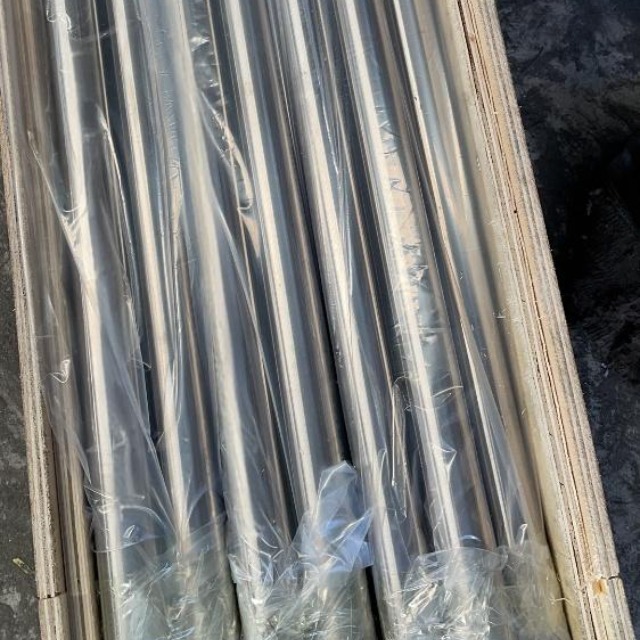
Extreme heat demands exceptional high-temperature creep resistance. Nickel-based materials excel in these brutal environments. They handle the intense internal pressures of gas turbines easily. They endure the continuous thermal cycles of heavy-duty heat exchangers. They do this without losing vital tensile strength over time. When metals experience prolonged heat, they tend to stretch or "creep." Nickel resists this microscopic deformation brilliantly.
Chemical processing applications also rely heavily on these specific metals. Engineers trust specialized variants like Incoloy Alloy to survive harsh chemical attacks. These materials play a crucial role in modern refineries. They resist chloride stress-corrosion cracking exceptionally well. They also prevent carburization in high-carbon atmospheres. You need this aggressive resistance when handling concentrated acids or sour gas pipelines.
Phase stability sets these metals apart at a microscopic level. We can contrast the thermal stability of nickel against titanium. Titanium undergoes rapid alpha-beta phase transitions at elevated temperatures. When titanium faces extreme high heat, it acts like a sponge. It absorbs ambient oxygen and nitrogen from the atmosphere. This aggressive absorption makes the metal dangerously brittle. It loses its ductility entirely and shatters under pressure. Nickel maintains its structural integrity flawlessly. It does not suffer from atmospheric embrittlement. It outlasts lighter alternatives in continuous heat zones. This makes it the undisputed choice for furnace hardware and exhaust nozzles.
Aerospace and automotive sectors operate under a strict weight reduction mandate. Titanium offers an unparalleled advantage here. Reducing vehicle mass translates directly to better fuel efficiency. It also maximizes available payload capacity for commercial aircraft. You simply cannot achieve these flight metrics using heavier metals. Titanium delivers the strength of steel at roughly half the weight.
Saltwater and galvanic resistance add another massive layer of value. Titanium shows exceptional resistance to seawater. Marine environments destroy lesser metals in weeks. Titanium forms a highly stable, continuous oxide film on its surface. If scratched, this microscopic film repairs itself instantly in the presence of oxygen. This self-healing barrier prevents corrosion even in harsh, churning oceans. It dominates marine propeller shafts and deep-sea submersible hulls.
Medical and bio-integration fields depend entirely on titanium's unique properties. It features complete non-toxicity within the human body. Furthermore, it has a uniquely low modulus of elasticity. This means it bends and flexes similarly to natural human bone. These traits make it the absolute gold standard for prosthetics. Surgeons prefer it for joint implants over heavier, stiffer alternatives. Stiffer metals often cause "stress shielding," where natural bone weakens over time. Titanium mimics human bone mechanics beautifully. It promotes active osseointegration, where living bone grows directly into the metal framework.
The shop floor quickly reveals the machining reality of titanium. Poor thermal conductivity creates massive pain points for machinists. Heat accumulates rapidly exactly at the cutting edge. The metal cannot dissipate heat into the chip. Operators must use targeted, high-pressure coolant to survive the cut. They must run strictly low cutting speeds. Specific carbide tooling is absolutely mandatory. Without these precautions, severe galling occurs. The metal literally welds itself to the cutting tool. Chatter ruins the workpiece surface finish instantly.
To machine titanium safely, you must follow strict operational guidelines:
Use rigid setups: Eliminate all vibration in the machine spindle and workholding fixtures to prevent tool deflection.
Apply generous coolant: Flood the cutting zone to prevent sudden thermal cracking and chip welding.
Maintain sharp cutting edges: Dull tools increase friction and induce rapid catastrophic failure on the shop floor.
Keep the tool moving: Never let the tool dwell or rub against the workpiece, which instantly hardens the surface.
Working with nickel presents an entirely different set of hurdles. You face a notoriously high risk of rapid work hardening. The metal hardens immediately upon cutting. The next pass of the tool hits a severely hardened surface. You must maintain consistent, aggressive feed rates. Positive cutting action prevents the tool from superficial rubbing.
Welding and joining require highly specific, controlled environments. Titanium demands strict inert gas shielding. You must use high-purity argon gas. Any atmospheric contamination during the weld turns the joint brittle. A contaminated titanium weld looks blue or flaky and fails instantly. Conversely, nickel requires specific, highly alloyed filler metals. You must manage interpass temperatures carefully to prevent hot cracking. Each joining process requires specialized operator training and rigorous visual inspection.
Project timelines rely heavily on smart sourcing scalability. Format and physical availability dictate how quickly you can start manufacturing. The availability of specific mill forms impacts your production schedule directly. In many industrial scenarios, sourcing ready-to-machine formats streamlines your entire production line. It prevents costly operational bottlenecks.
For instance, you might order Incoloy 800 Sheet for large furnace components or specialized protective sheathing. This immediate sheet availability reduces raw material waste. It also cuts down preliminary cutting and flattening steps. For rotating mixing shafts or heavy structural fasteners, Incoloy 20 Bar provides a ready-made cylindrical geometry. You bypass several rough turning operations. This allows your CNC lathes to start finishing passes immediately.
We must also consider the reality of supply chain volatility. Global supply chain factors heavily influence material availability. Price fluctuations affect both titanium sponge and raw nickel inputs. Geopolitical shifts can restrict access to these vital virgin ores. Mining disruptions often cause sudden market shortages. Engineering teams must monitor these global material trends closely. You should diversify your approved supplier base. Securing reliable metal distributors mitigates severe sourcing risks. Selecting standard, widely stocked grades prevents sudden project delays when global markets shift unpredictably.
Let us summarize the shortlisting logic for these advanced materials. You should default to titanium for weight-sensitive applications operating below 600°C. It clearly dominates the aerospace, marine, and medical fields. Conversely, you should default to nickel alloys for continuous extreme heat. They handle aggressive chemical processing environments perfectly without losing internal strength.
Your next-step action requires practical, localized testing. We highly recommend consulting directly with a certified materials metallurgist. Contact your trusted materials supplier to run a dedicated pilot test. You should evaluate specific grades directly on your shop floor before scaling production. This hands-on validation ensures you make the safest, most efficient choice. Proper upfront testing guarantees your final components survive their intended environments securely.
A: Both present unique challenges rather than one being universally harder. Titanium suffers from poor thermal conductivity. It retains intense heat at the cutting edge, requiring high-pressure coolant and slow speeds to prevent galling. Nickel, however, has severe work-hardening tendencies. It hardens instantly when cut, requiring aggressive, continuous feed rates to prevent the tool from rubbing and breaking.
A: No, you cannot fusion-weld them together directly. They share deep metallurgical incompatibility. Attempting to weld them creates highly brittle intermetallic phases that crack instantly upon cooling. If you must join these two distinct metals in an assembly, you must use mechanical fastening methods like specialized bolts, rivets, or threaded inserts instead of thermal welding.
A: While both perform exceptionally well, titanium generally provides superior, maintenance-free performance in marine environments. It forms a continuous, self-healing oxide film that effectively immunizes it against saltwater and galvanic corrosion. Nickel alloys also resist seawater well but are typically reserved for applications where high heat and saltwater exposure overlap simultaneously.


